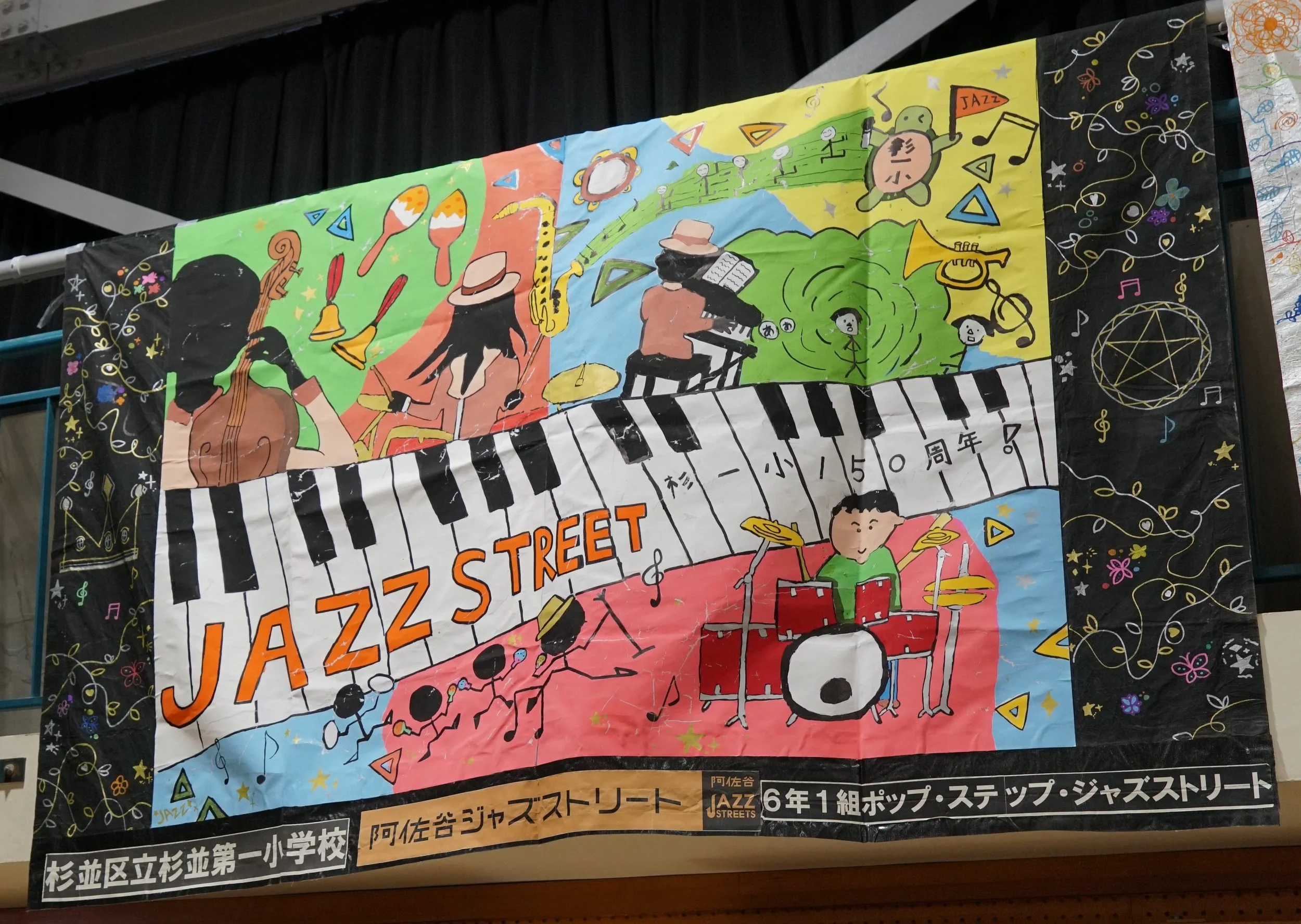
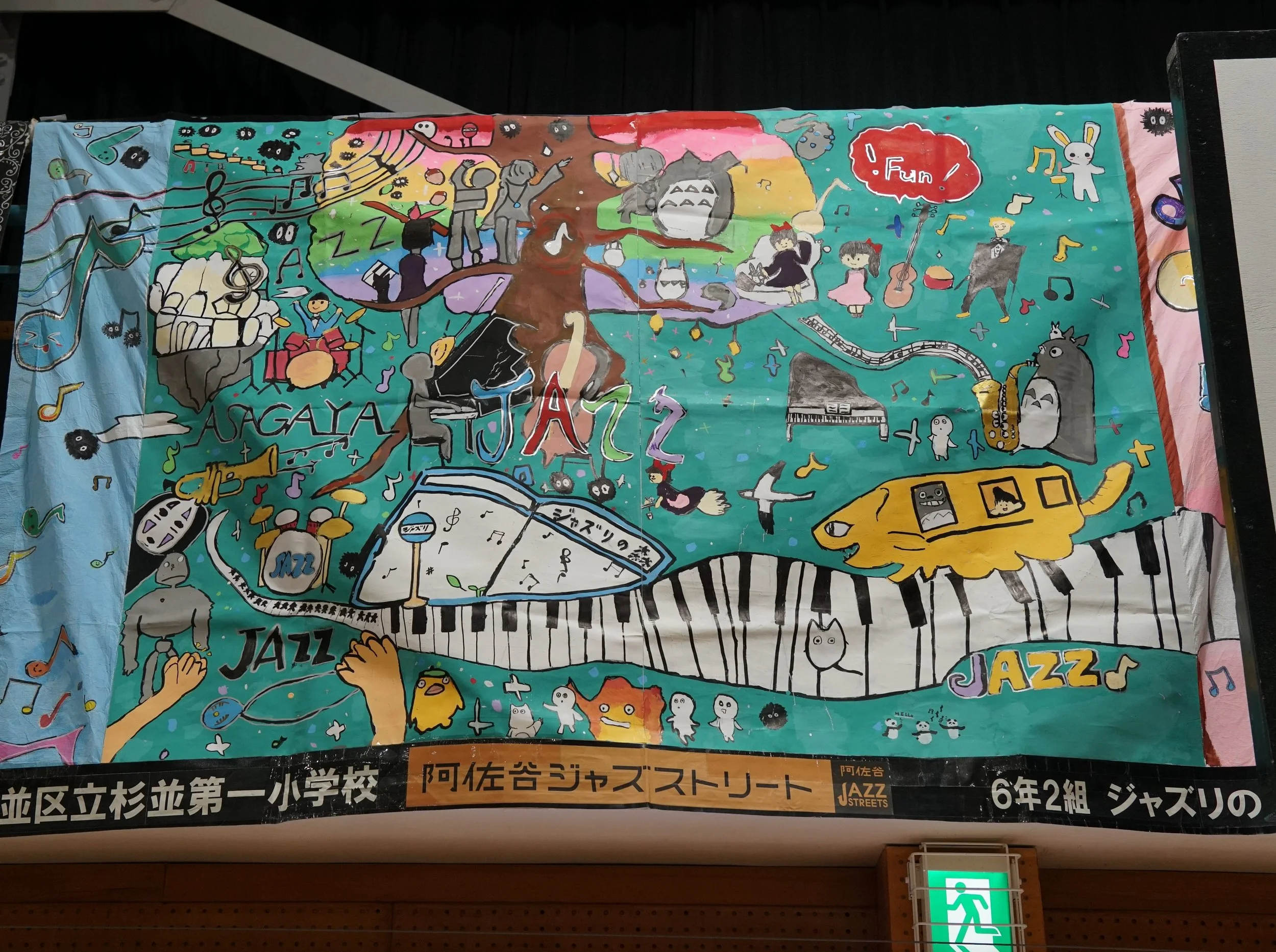
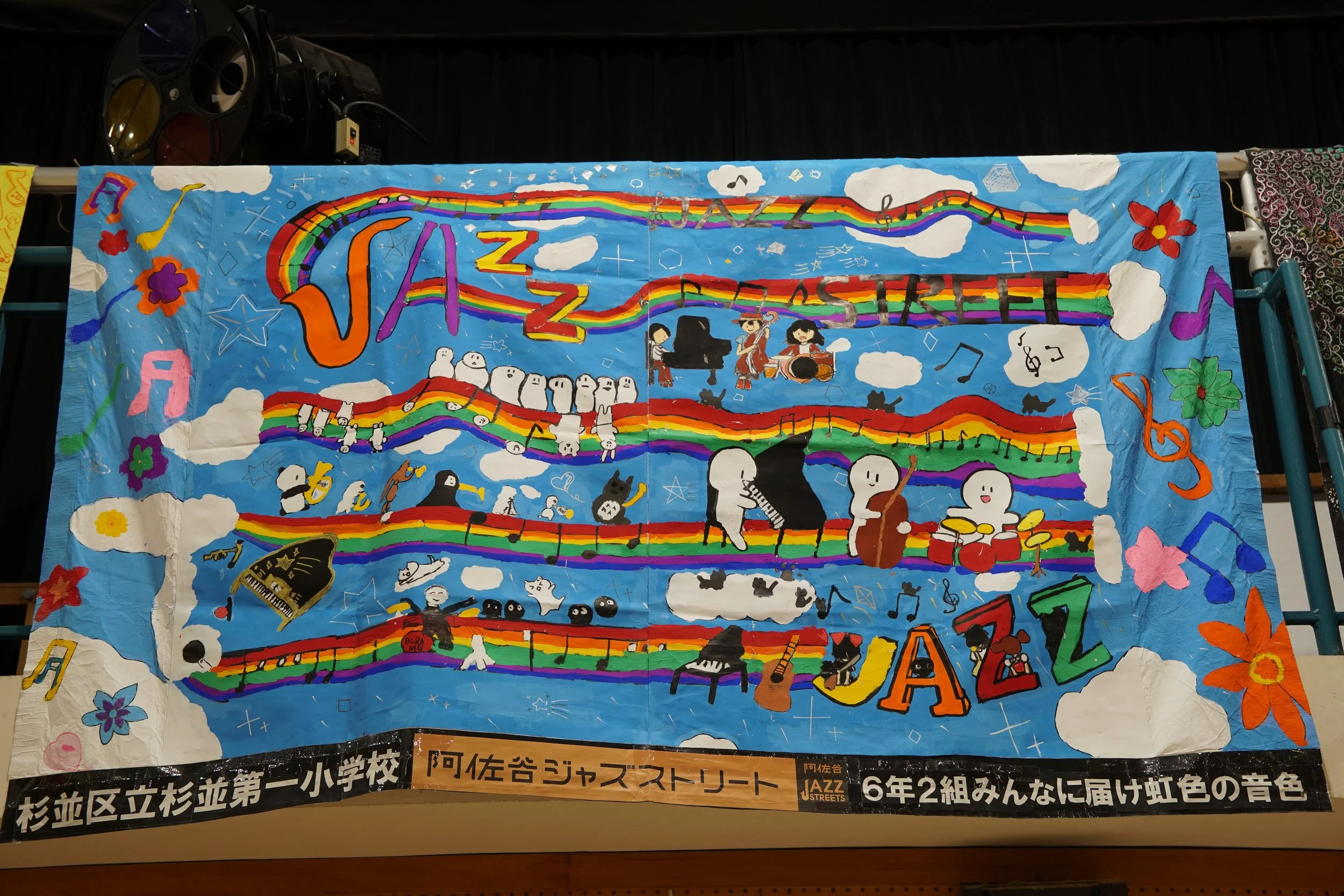
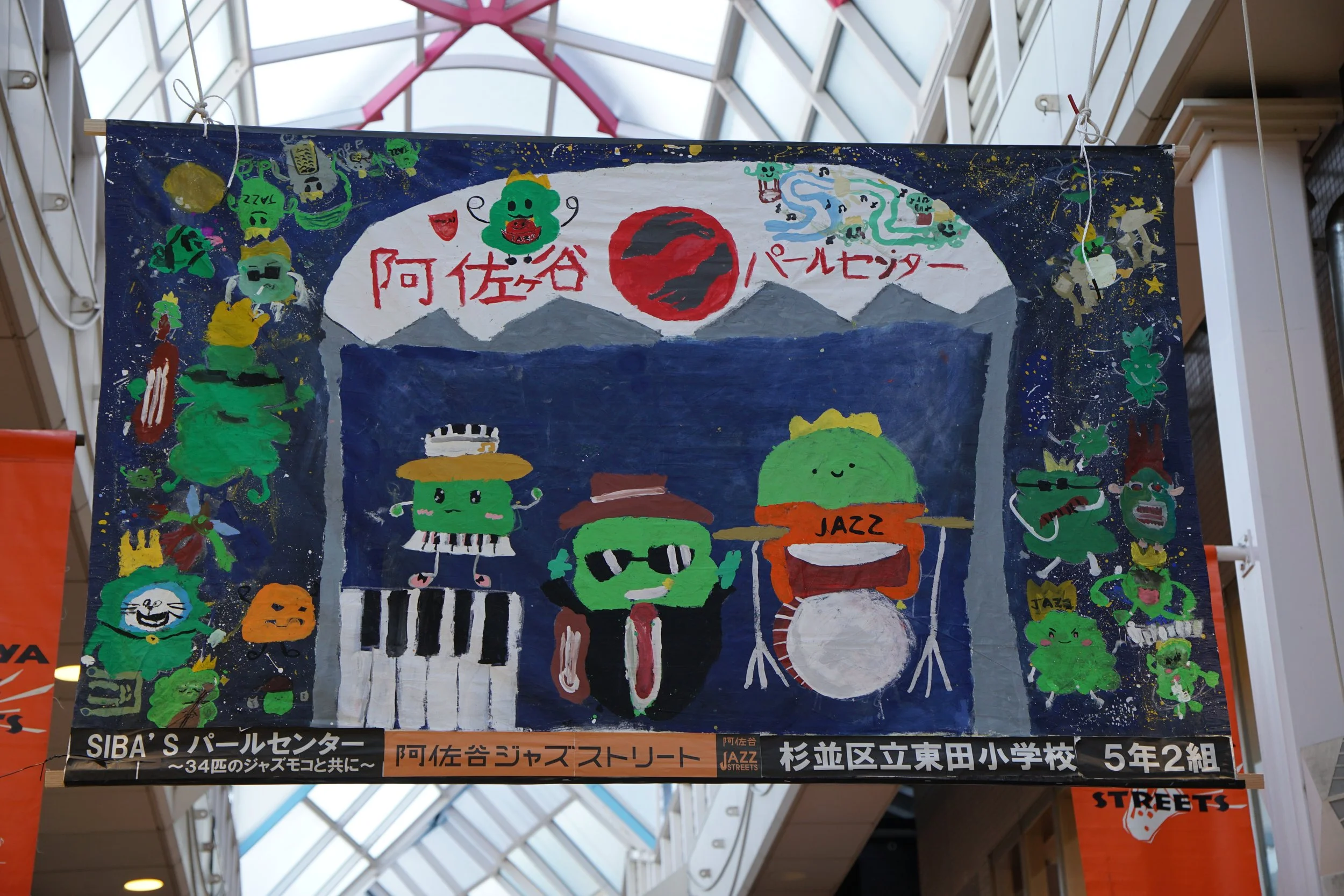
Student “Jazz Art Exhibition”
October 24 to November 5
Asagaya Jazz Streets
Suginami First Elementary School
Asagaya Pearl Center Shopping Street
One of my favorite parts of the Asagaya Jazz Streets is the children’s jazz art. The aesthetics of jazz have always shown up in record album covers and photography exhibits, postmodern paintings, and dance performances—all influenced by watching and hearing jazz. My mother is an artist and always sketched the musicians when our family went to jazz shows. As a piano student, I paid attention to the music, but the visuals are an important part of all musical performances. Even when musicians dress down, they’re dressing up, performing with just as much visual presence as aural.
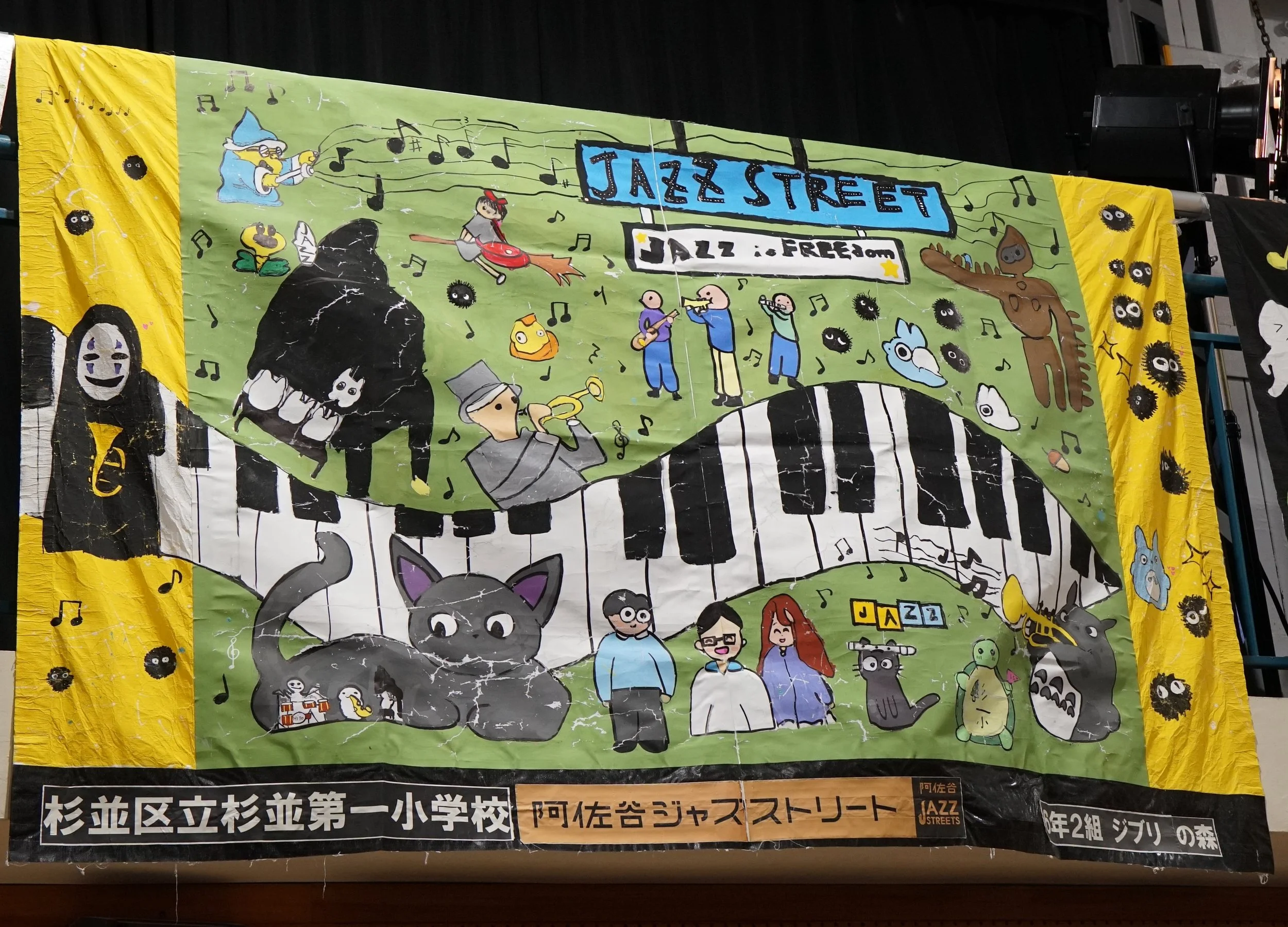
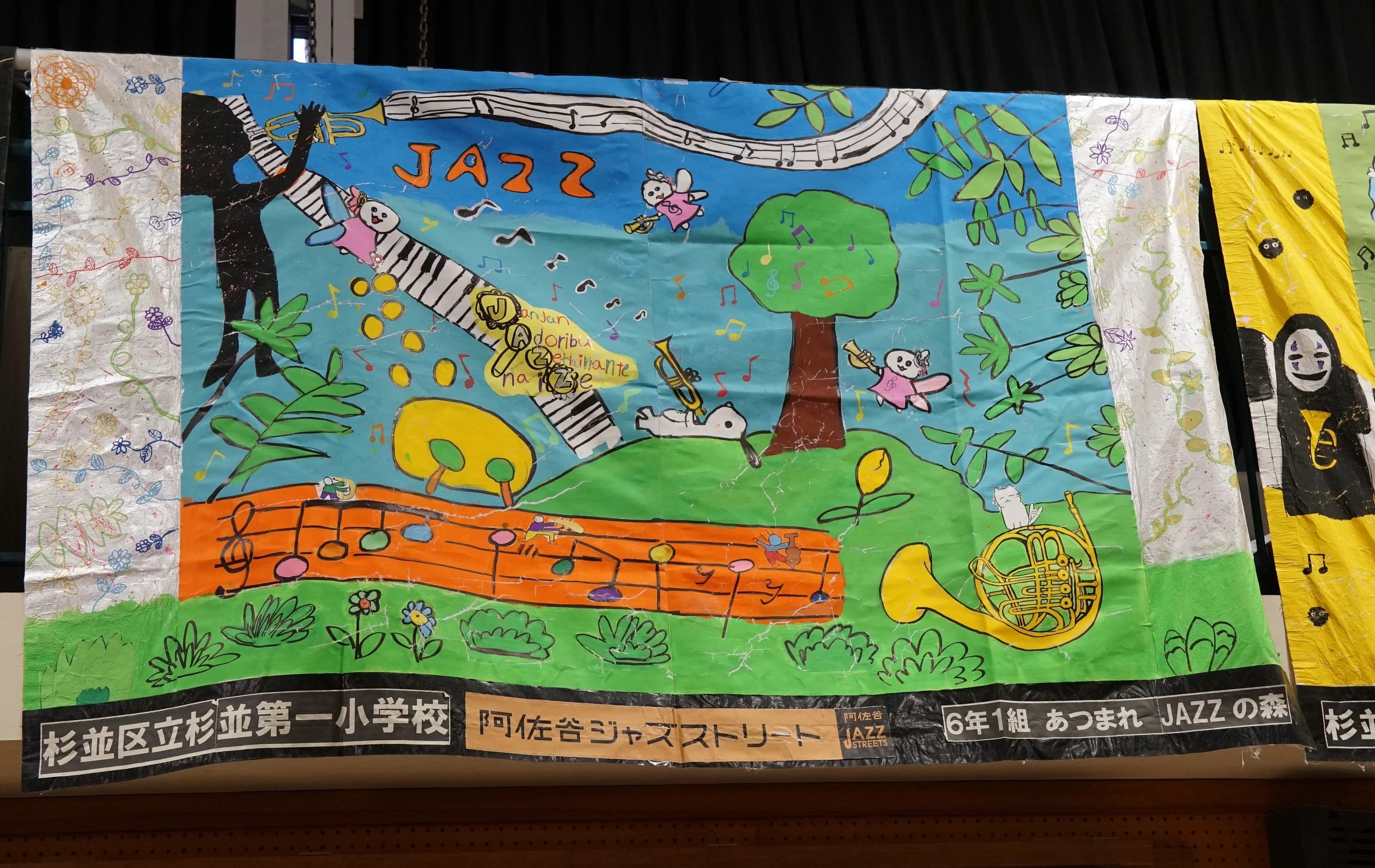
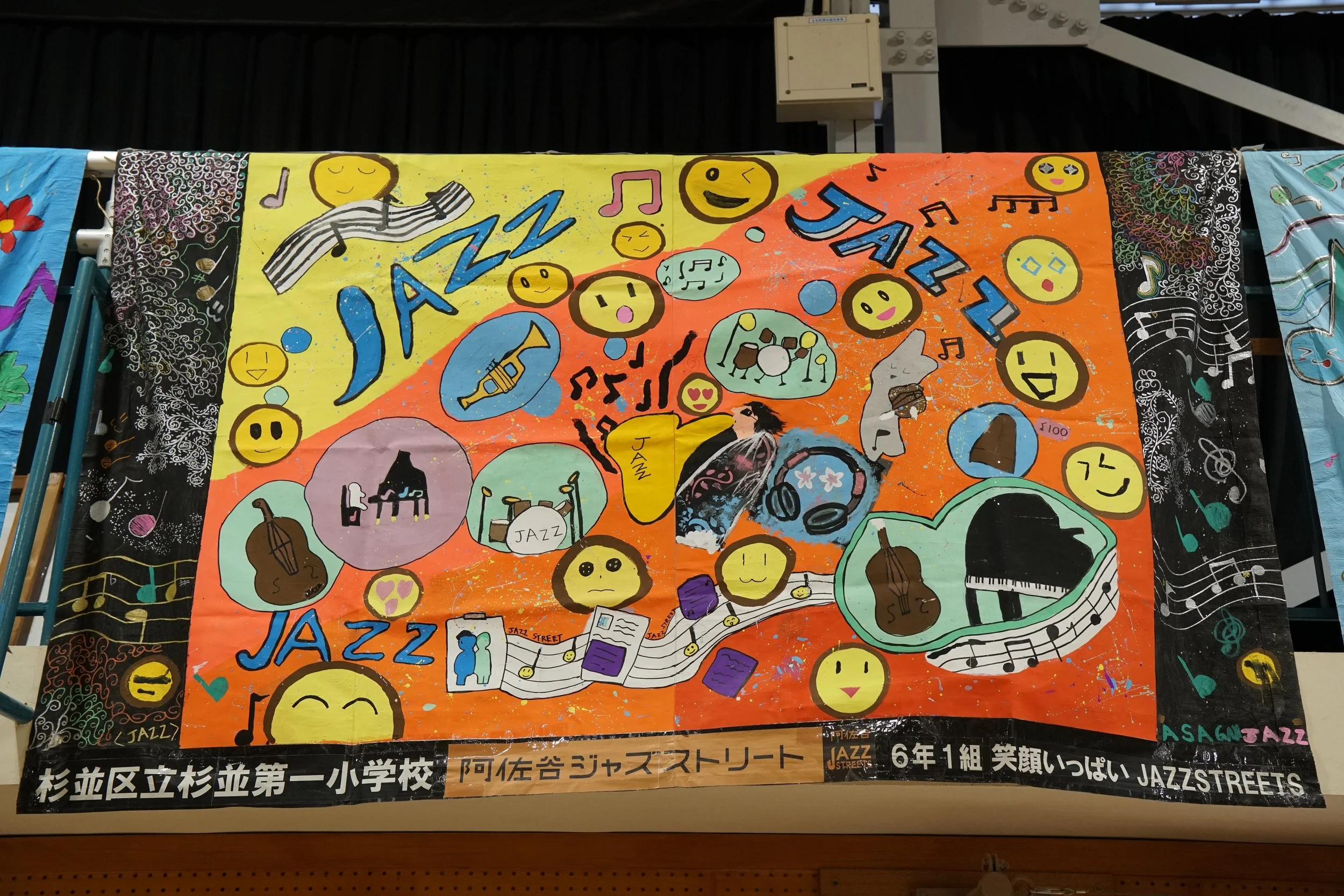
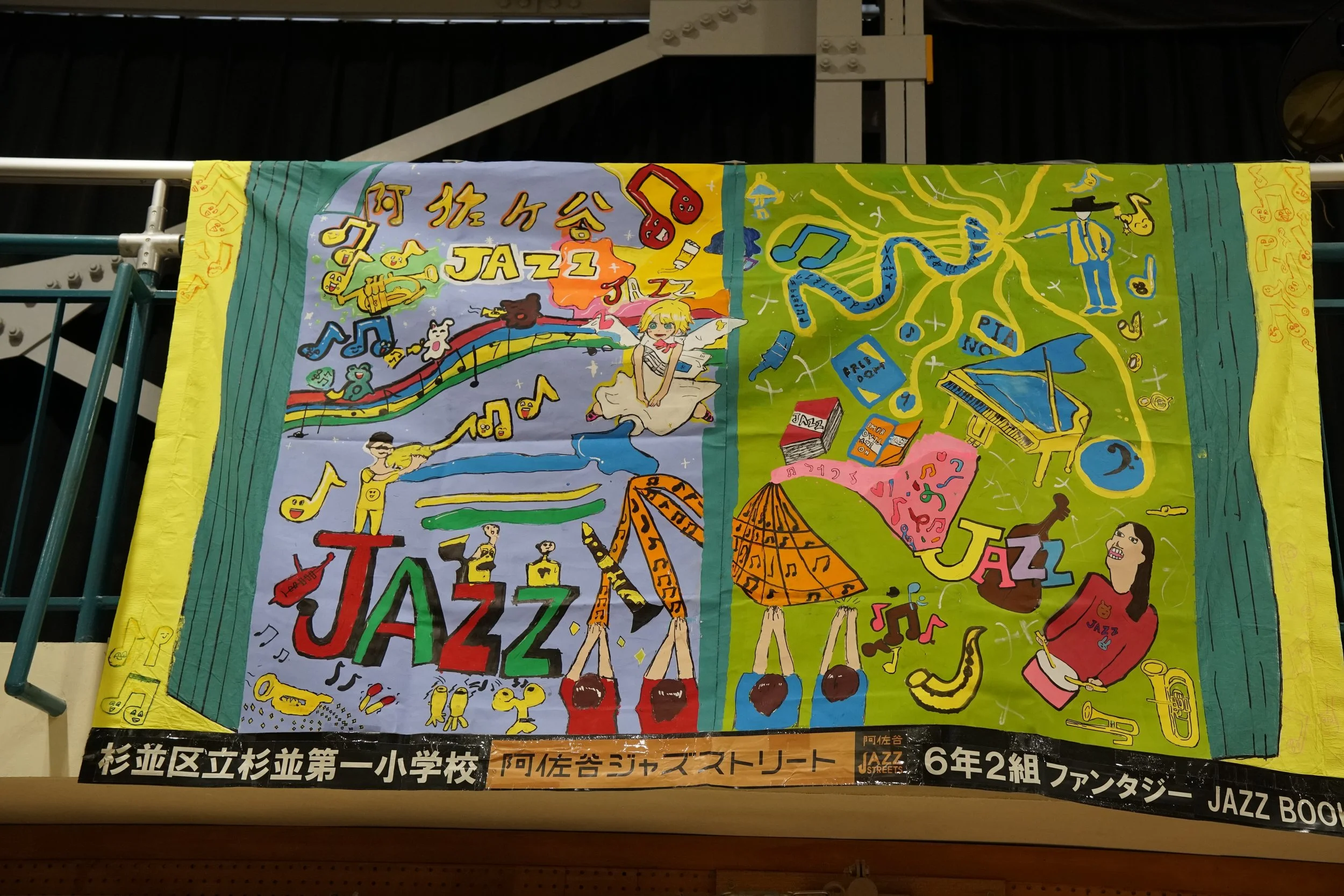
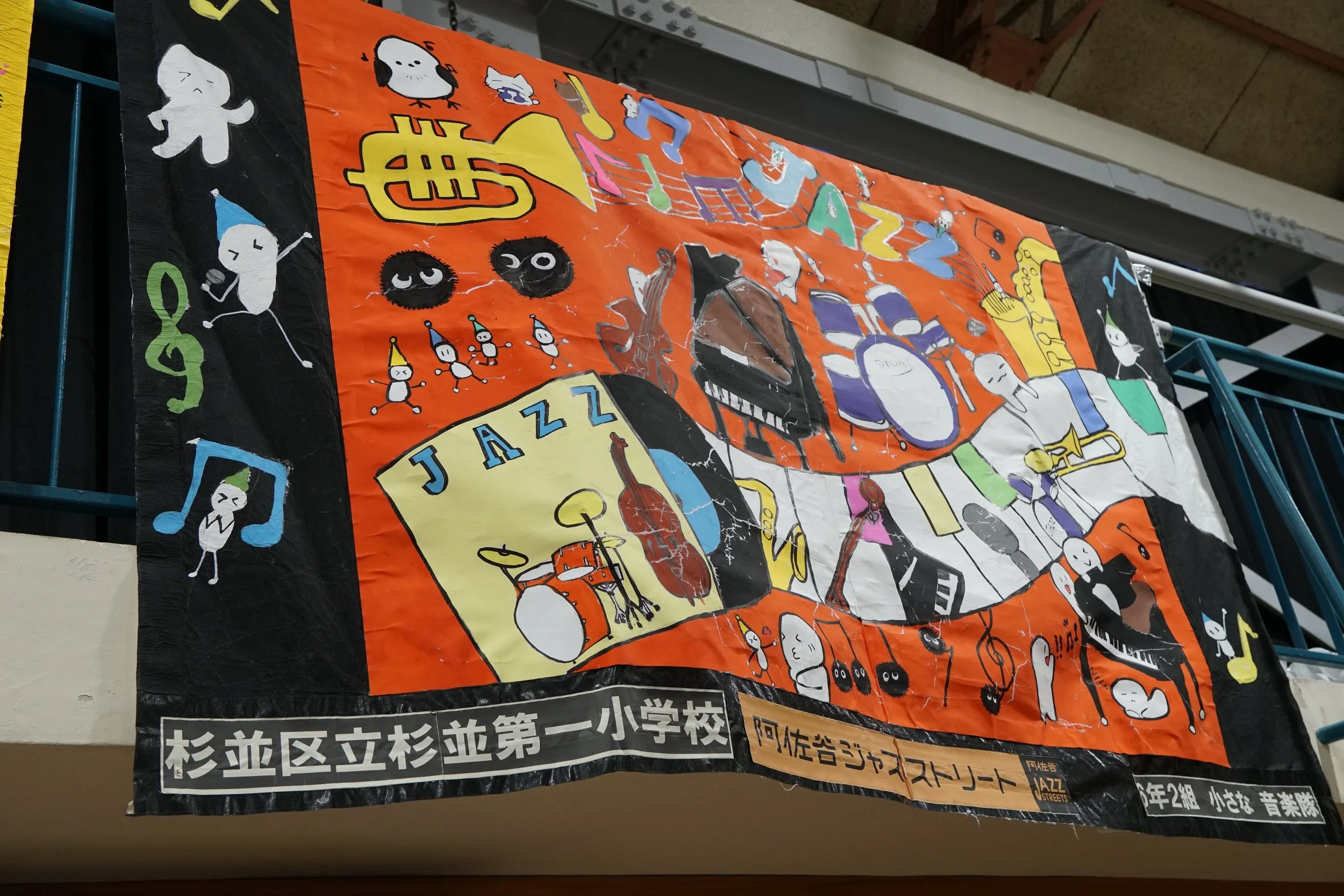
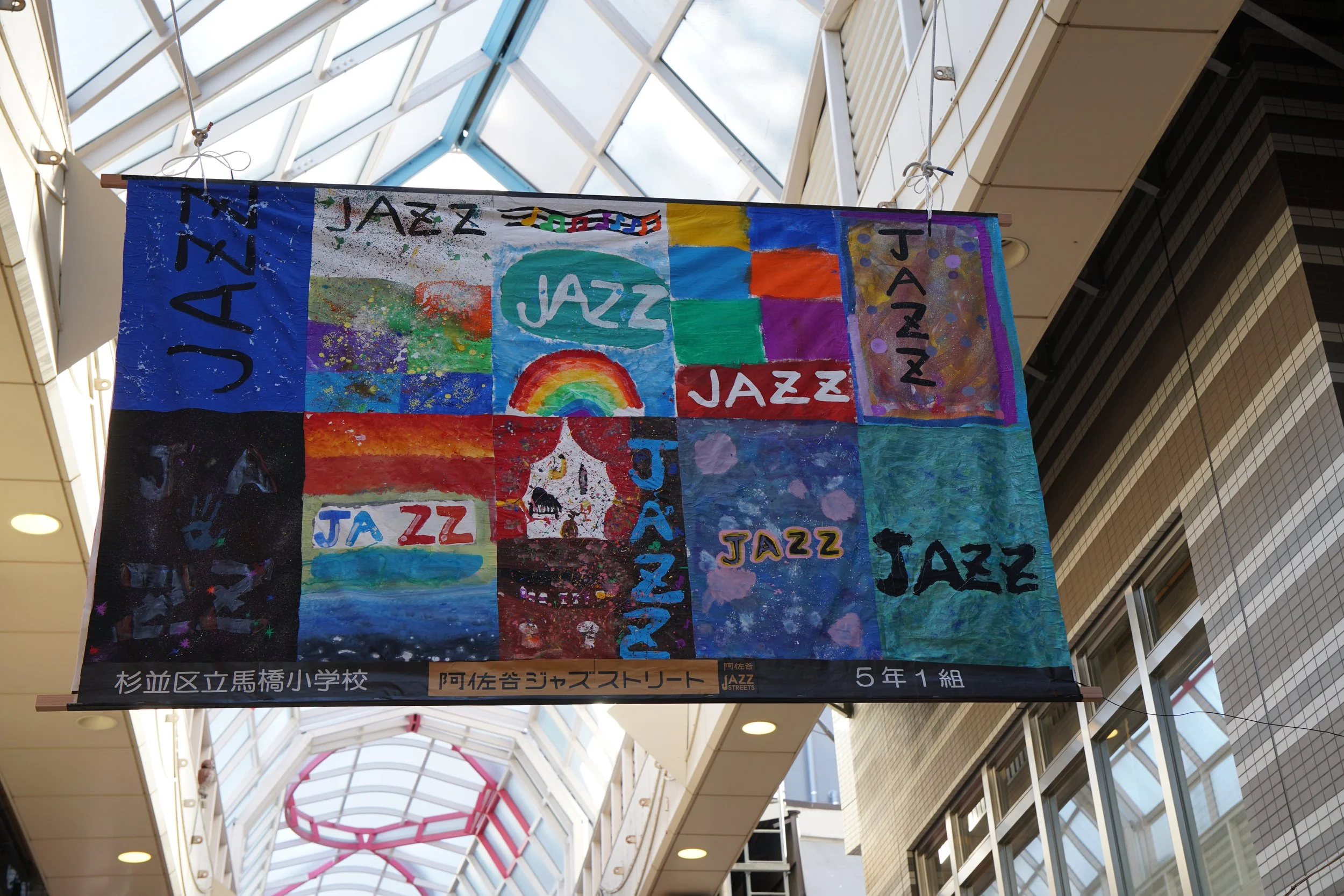
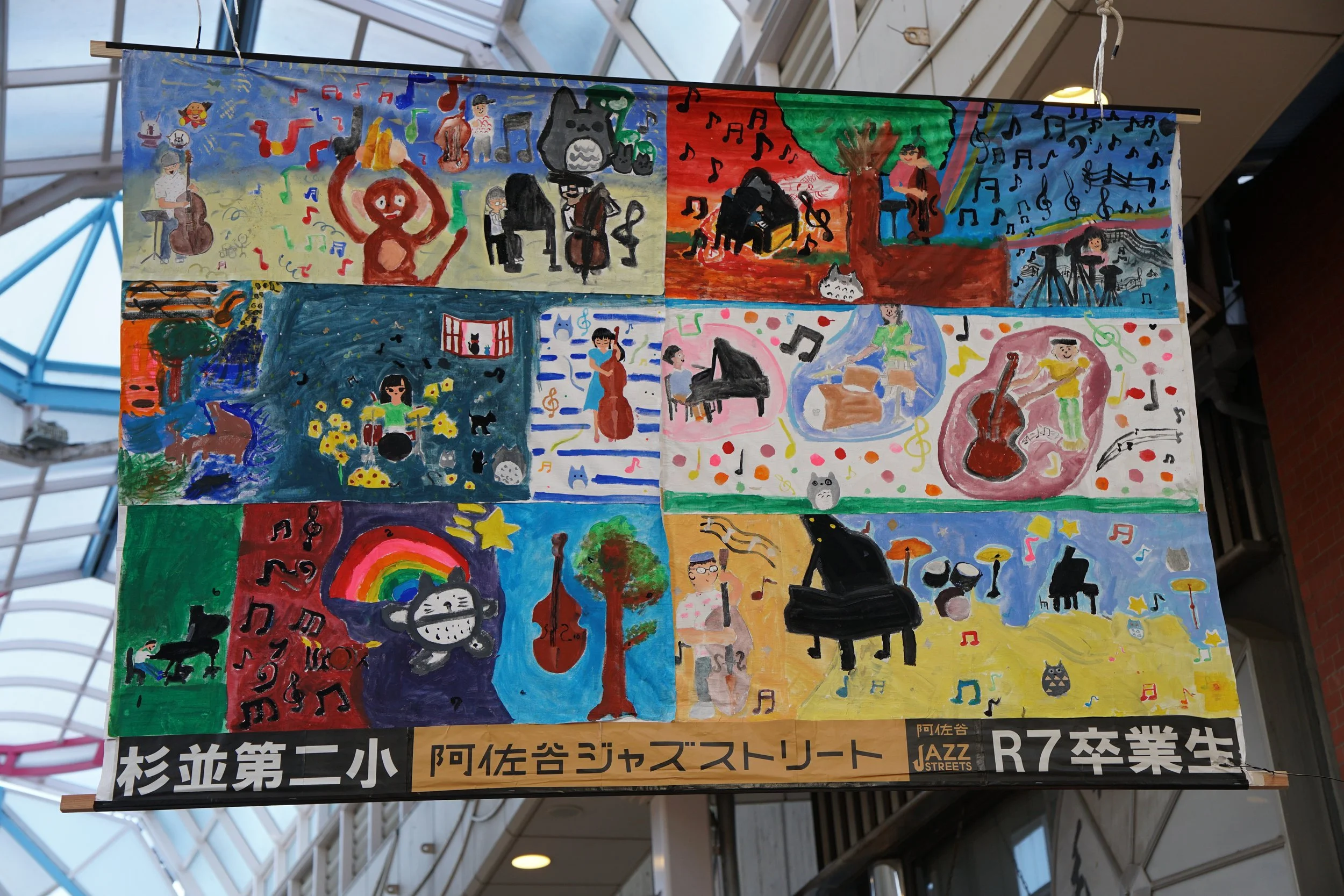
The children in Asagaya elementary schools were not performing jazz musically, but they were visually. Every year, teachers in and around Asagaya give them the chance to show their heartfelt response to the music by creating and displaying banners about jazz. The first time I saw their work in the school's gym years ago, I thought it was adult work, like many festivals. When I looked closer and saw the elementary school and class that created them, I was very impressed.
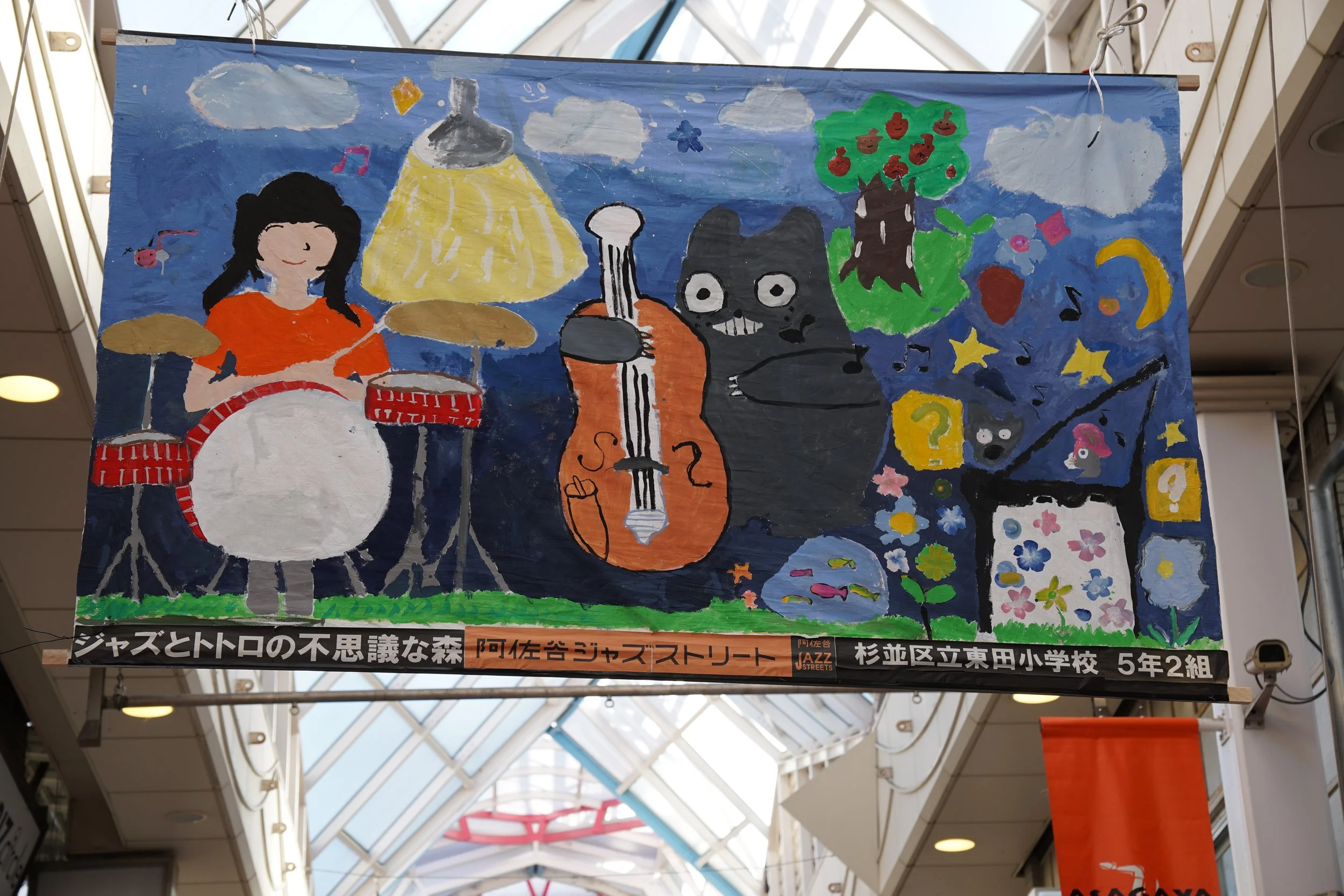
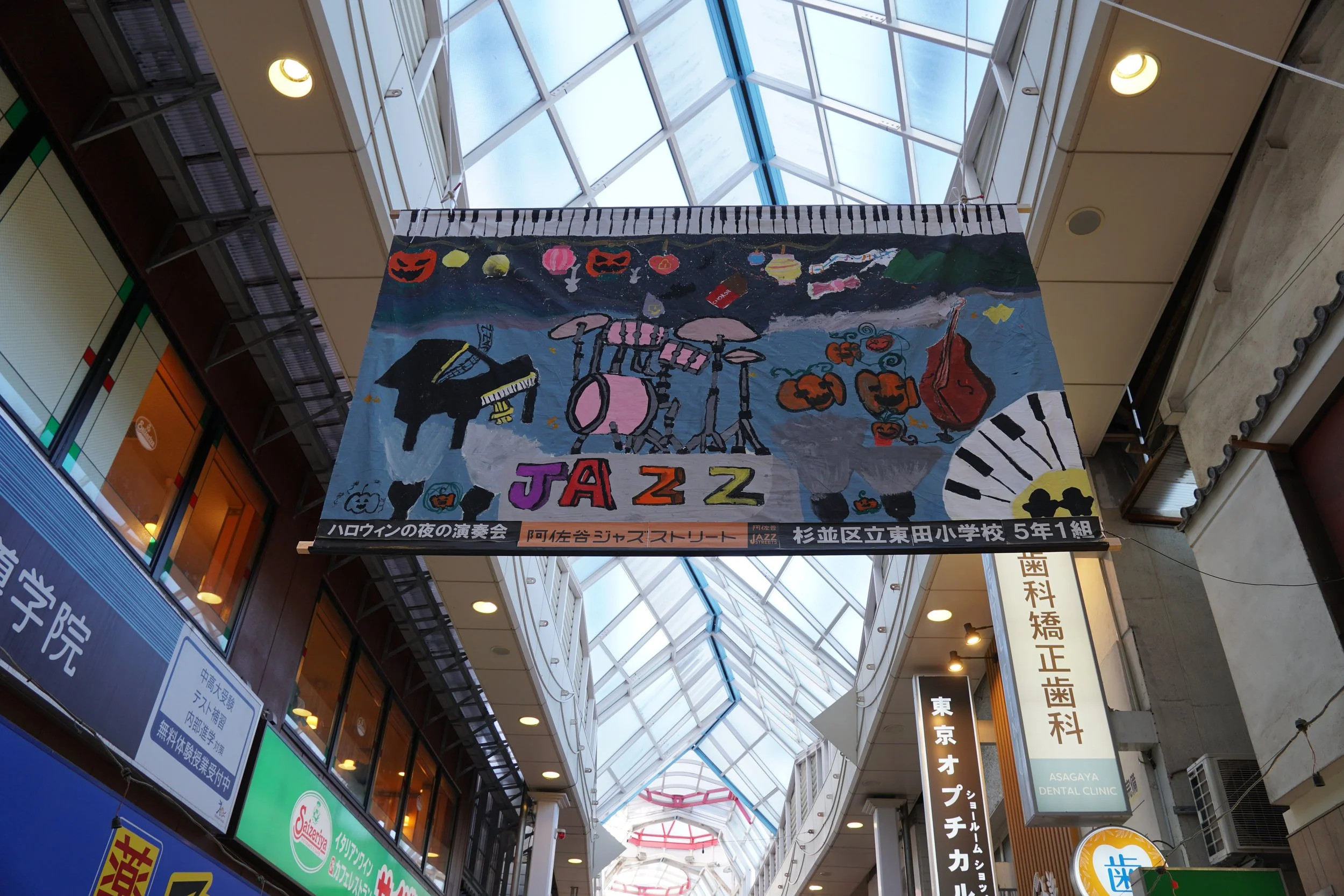
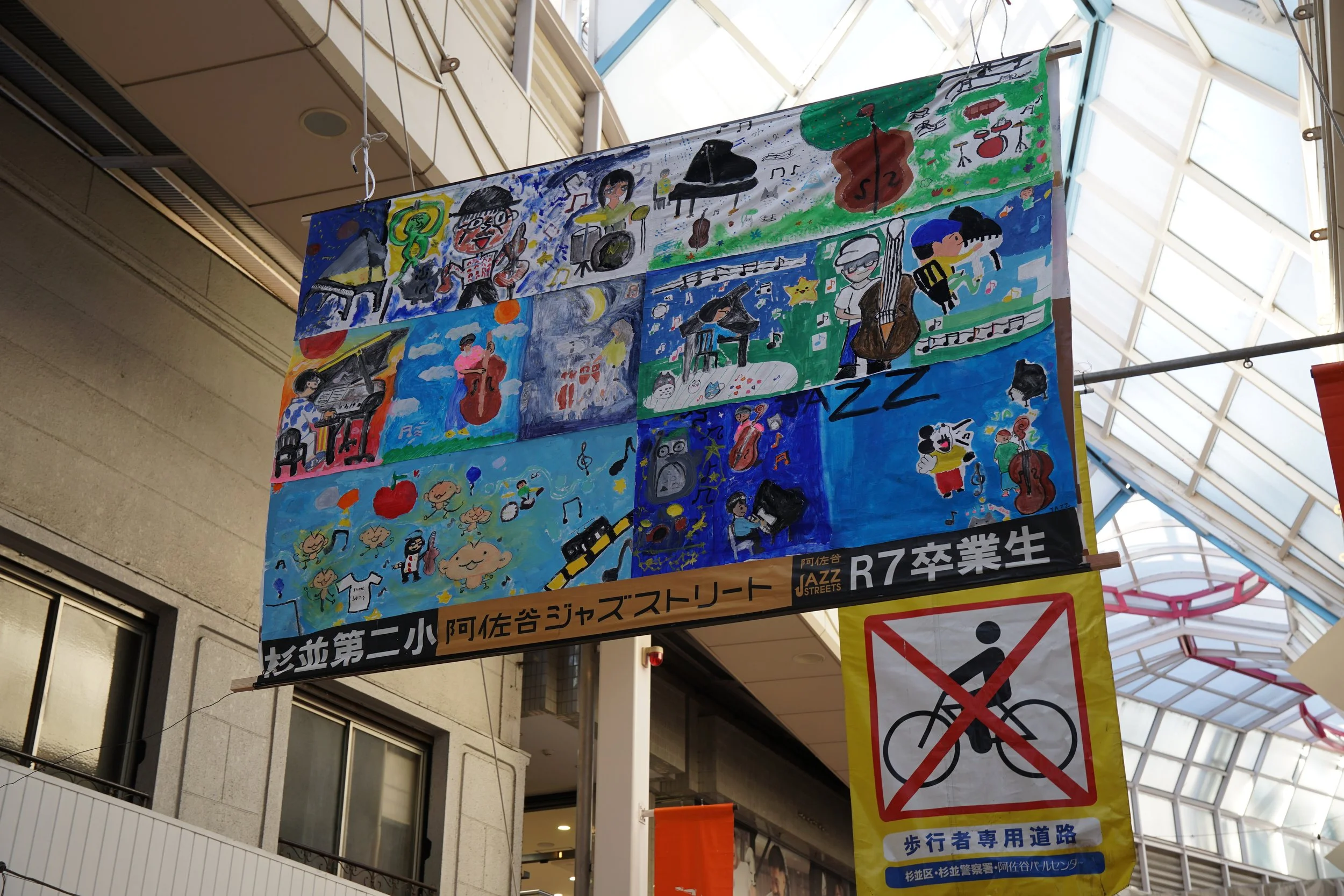
What colors and lines! What textures and energy! What feeling! This time, I took as many photos as I could of both the banners hanging in the school gym and the banners lining Pearl Shopping Street. There were a lot, all of them fascinating explorations and energy-laden expressions. While I was taking photos after one performance, a woman came over and started explaining. She was one of the organizers who helped to get art teachers and students to participate in the exhibition at the school and in the street. At four of the schools, students took part in jazz appreciation classes, listening to the music and hearing about it before stretching out canvases and getting to work.
You often see student artwork at train stations, reflecting the seasons or holidays, and occasionally even on some trains. I always stop to look. They made me wonder how we process music, how children respond to music, and more abstractly, how the synaesthesia of sounds and colors flows into expressions of motion, proportion, arrangement, and other elements. How can sound transfer to a two-dimensional expression? Well, it does.
What I liked especially in these works were the bold colors and the sense of motion. In the students’ work, musical notes don’t just sit there—they rise up, walking, talking, flying, and dancing. The instruments, too, bend and contort, as if alive, as if the melody lines emerge in a flow of colors out of the instruments, whose natural lines seem more alive than inert. In most of the works, when people or creatures appear, their arms fling wide, as if moving or dancing, as if expressing the experience of joy. The creatures students paint on the banners, as Ghibli-ish and Disney-like as they sometimes are, look energized and in motion.
Pro jazz pianists might feel a little smug that keyboards move through the center of many of the banners, but in and around the black and white, rest plenty of other instruments, ones maybe harder to paint (try painting a drum kit or a French horn!). The banners are also filled with multicolored notes and staves, not straight and perfect, but loose and limber. All the stars, flowers, hearts, and hands, the added shapes of young people’s worlds, were painted as if in motion. Notes flow out of the horns in bright colors while staff lines change to rainbows.
I love the words popping up, too. There are lots of “Asagaya” and “jazz,” of course, but also words like “free” and “fun!” (and, nicely, all spelled correctly). Each banner seemed like a musical dreamscape. Music-making, music-appreciating humans, and otherworldly musical animals filled every banner, all content and pleased with where they were. All of them strike jazz-cool poses! They tumble, dance, roam, hold up their arms, smile, shake their heads, raise their hands, and shake their legs. Or maybe I’m just imagining it. But then again, that’s what’s so fun about these students’ work.
The banners in the gym transformed the space below. It’s impossible to listen to the music on stage without your eyes and attention roaming to the enormous overhead banners. Many of the banners that hung on the street were divided into multiple sections, with multiple views of jazz joining as one. The colors are so wildly varied that the different sections somehow always cohere into a vivid tableau.
What student or parent wouldn't be proud to see the work hanging along the shopping street? I loved walking around and looking up to see creativity raised like a force of nature to be worshipped, the banners like the banners and images in a temple. Music is usually thought to be for the ear, but clearly, it’s for the eye as well. It’s all in how you take it in, process it, and pass it back out again.
Participating schools:
Suginami First Elementary School
Suginami Second Elementary School
Suginami Sixth Elementary School
Suginami Seventh Elementary School
Mabashi Elementary School
Higashita Elementary School
Asagaya Junior High School
Sugimori Junior High School