
Yokohama Jazz Promenade
October 10 and 11, 2026
Multiple venues around Yokohama
The Yokohama Jazz Promenade was in full swing with glorious weather (for a change). With more bands than ever, from amateur to professional, the weekend was packed with music from morning to evening, and later at local clubs. With two large halls, thirteen street stages, two parades, and sixteen jazz clubs, jazz groups played continuously from noon to six with only brief breaks for equipment changes and soundchecks.
Lighthills Big Band
The variety was an impressive charting of jazz’s many sub-genres. The 40-minute sets condensed and maximized each group's musical energy. The first day featured lectures and performances marking the 100th anniversary of Naka-ku, Yokohama's central ward, further establishing Yokohama’s bona fides as Japan's historical gateway for jazz. Yokohama’s international vibe was represented with a special stage featuring musicians from Taiwan. Everywhere, Yokohama’s pride was clear, and it was easy to see why jazz has taken deep root in the city, and all over Japan.
I’ve been going to the Yokohama Jazz Promenade for over 20 years. This year, the Promenade felt like it had returned to its former vibrancy, after typhoon weather and the pandemic had whittled away at the once-large vision. With a looser vibe and a more relaxed schedule, the music flowed beautifully over the two days. The age range of participants was also fascinating, with junior high school bands taking the stage before or after “silver” groups (as one leader called his band). Also strikingly obvious this year was just how many more women took seats in the bands, and in the audience. Once upon a time, jazz was a male pursuit. No longer.
Though I was standing and walking, without stopping, over two days, I only made it to about half the venues. The scale is impressive. “The whole city as a stage!” was once the Promenade's catchphrase, and this year that rang true. There’s something intriguing about hearing so many groups in such a short time. When one forty-minute set was great, it was easy to hang around for the next one, since each venue had a through-line of similar styles. With a 15-minute break between groups, it was also easy to promenade to the next stage for something different. Whether you circulated or sat, it was more live music in more styles than you could find anywhere.
Baysound Jazz Orchestra
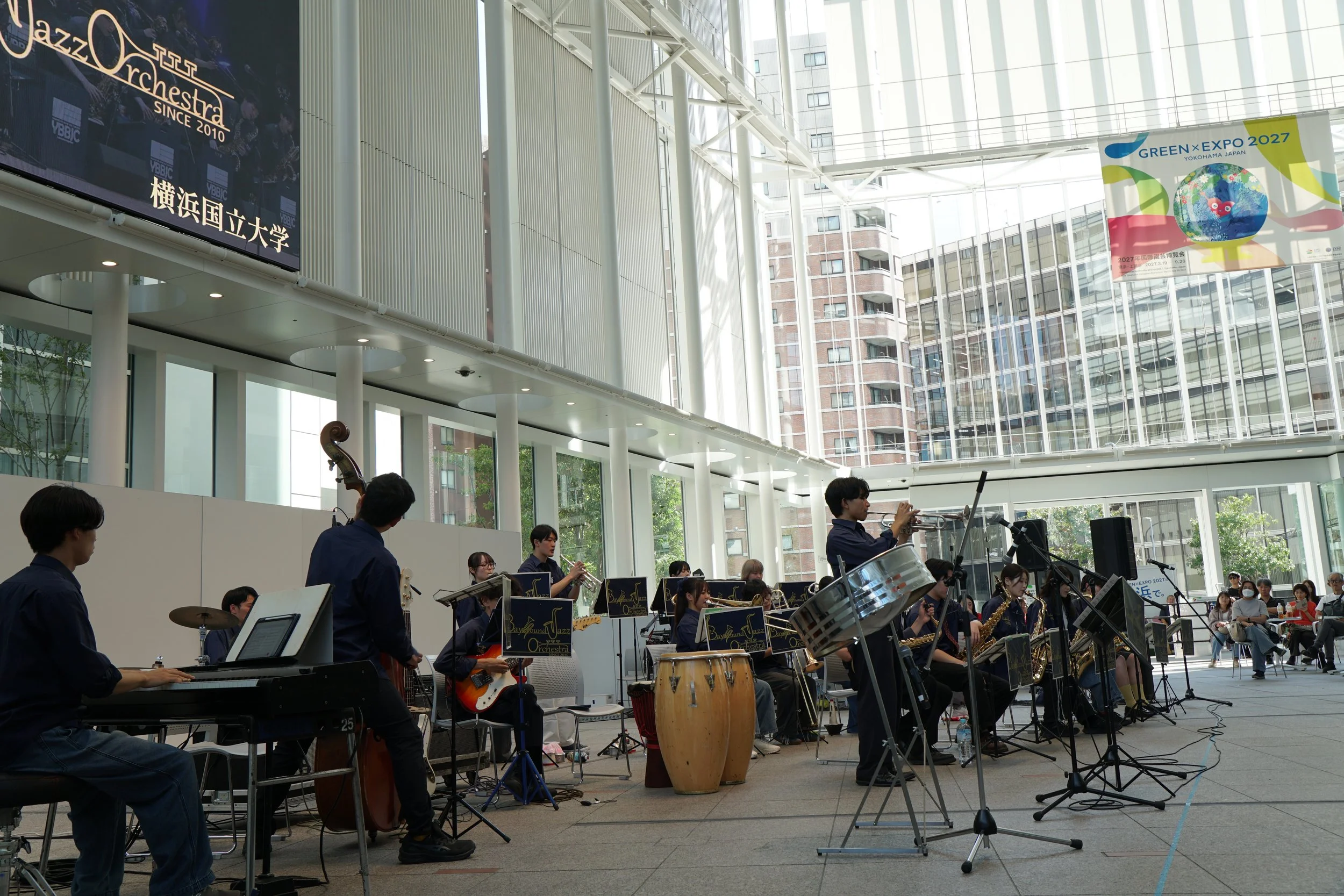
My first stage was in the atrium of the Yokohama City Office for the Baysound Jazz Orchestra from Yokohama National University. They have so many members that they split into two orchestras (I missed the junior one). They played standards like “Ugetsu” and “Bugle Call” with energy and power (and a lot of preparation). The atrium was not built for jazz bands, but the sound system held its own against the upper reaches of the atrium’s glass design, and chatting, strolling pedestrians. It’s always interesting to hear music “in the wild,” so to speak, outside the confines of the usual jazz-only clubs.
Panasonic Count Seinow Orchestra
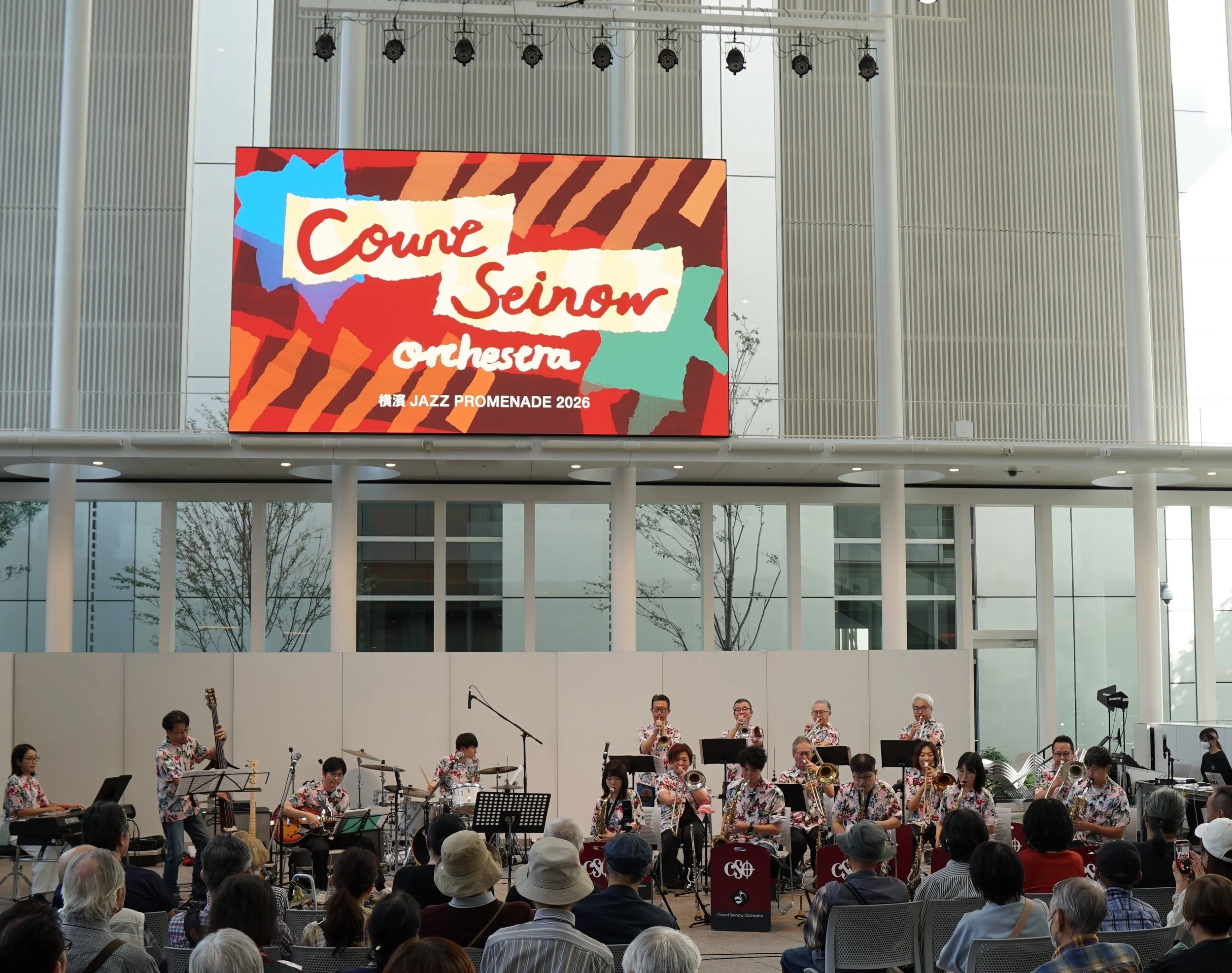
The university band was followed by the long-running Panasonic Count Seinow Orchestra. As the leader noted, the members were mostly the age of the university band’s fathers, or “grandfathers” as one member added. This adult big band performed classic tunes from Glenn Miller and other big bands. Bands like this one reveal strong historical awareness and genuine enjoyment. They steep themselves in the past without apology. I loved the mini slide trumpet and Brazilian arrangements. The archival sense of preserving the music was pleasing and flourishing. After all, for many listeners, the tunes might have been written the week before, not in the 1930s.
Wandering over to the outdoor stage outside Queen’s Park, I was lucky enough to arrive in time for the Moon Inlet Sounds Orchestra from Fujii Gakuen Junior and Senior High School in Yamanashi Prefecture. Wow! I mean WOW! Real Latin rhythms in the hands of such youngsters. Did they take a school trip to Cuba? It's hard to imagine where they learned those intense Latin rhythms and funk beats, but they did. They didn't just learn it; they felt it! The soloists took flight while the rock-solid percussion, bass, and guitar kept the music grounded in faraway cultures, but so powerfully in the moment, too. (I was so impressed I asked the band director to follow up with another article later!)
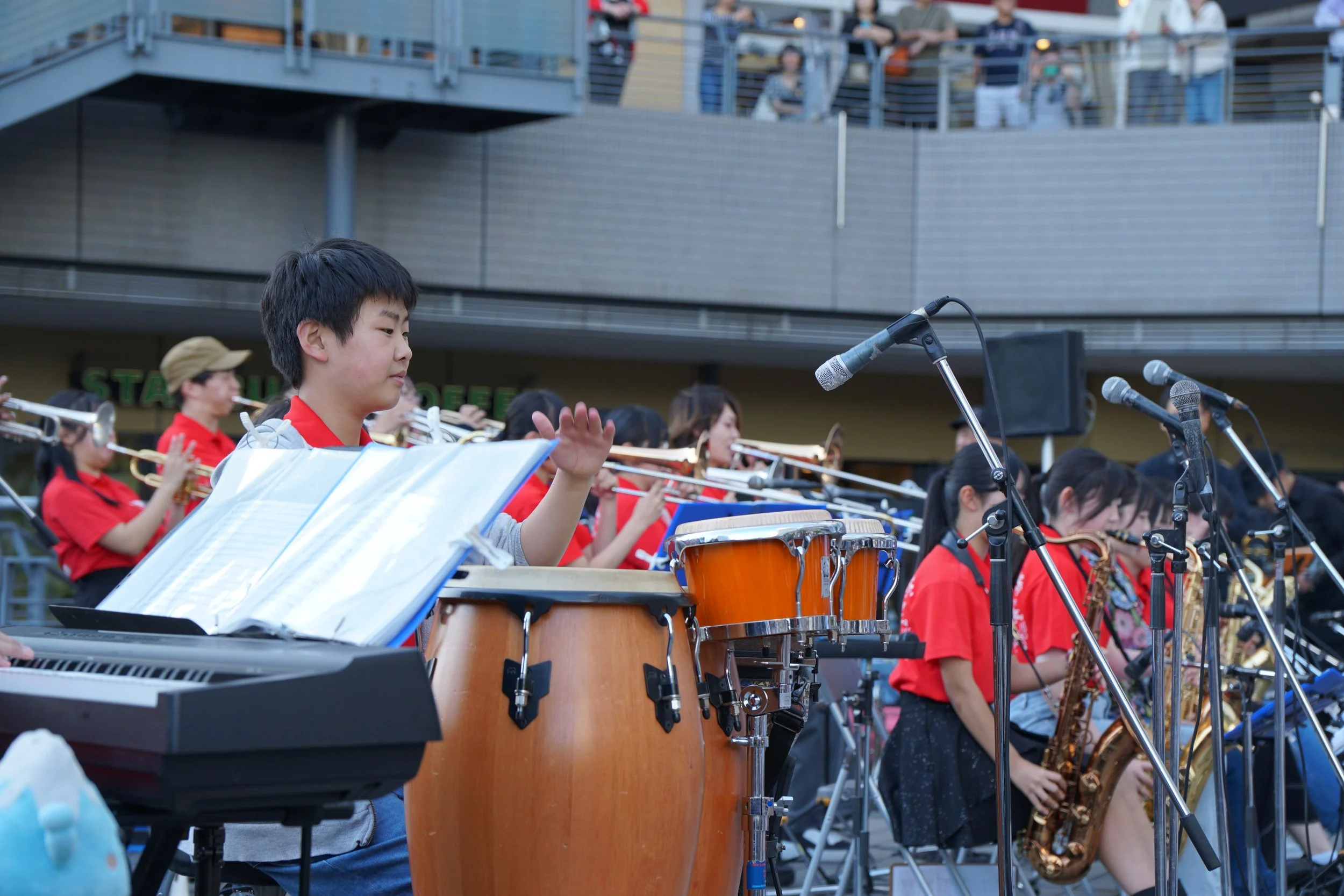
Moon Inlet Sounds Orchestra
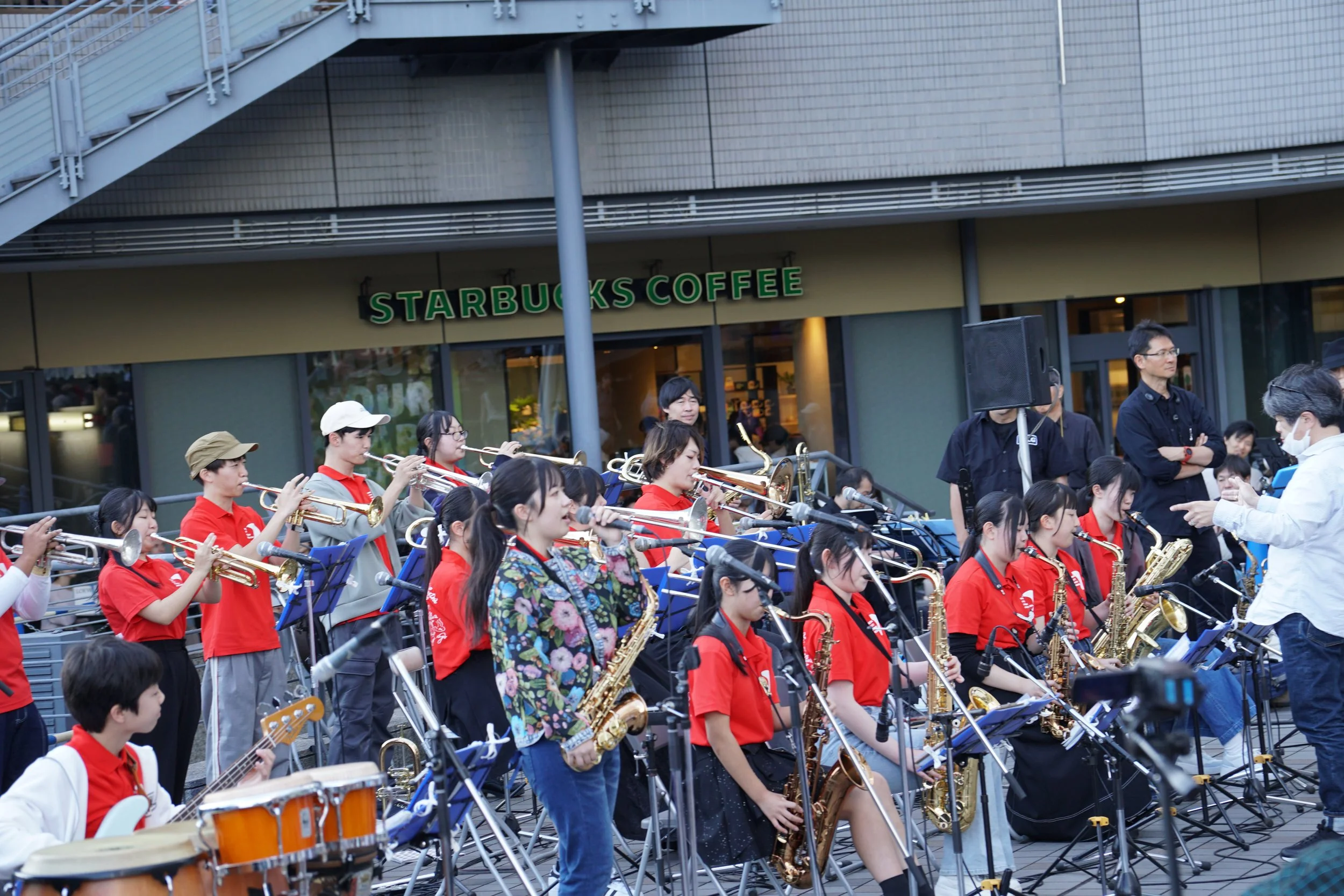
Moon Inlet Sounds Orchestra
Moon Inlet Sounds Orchestra
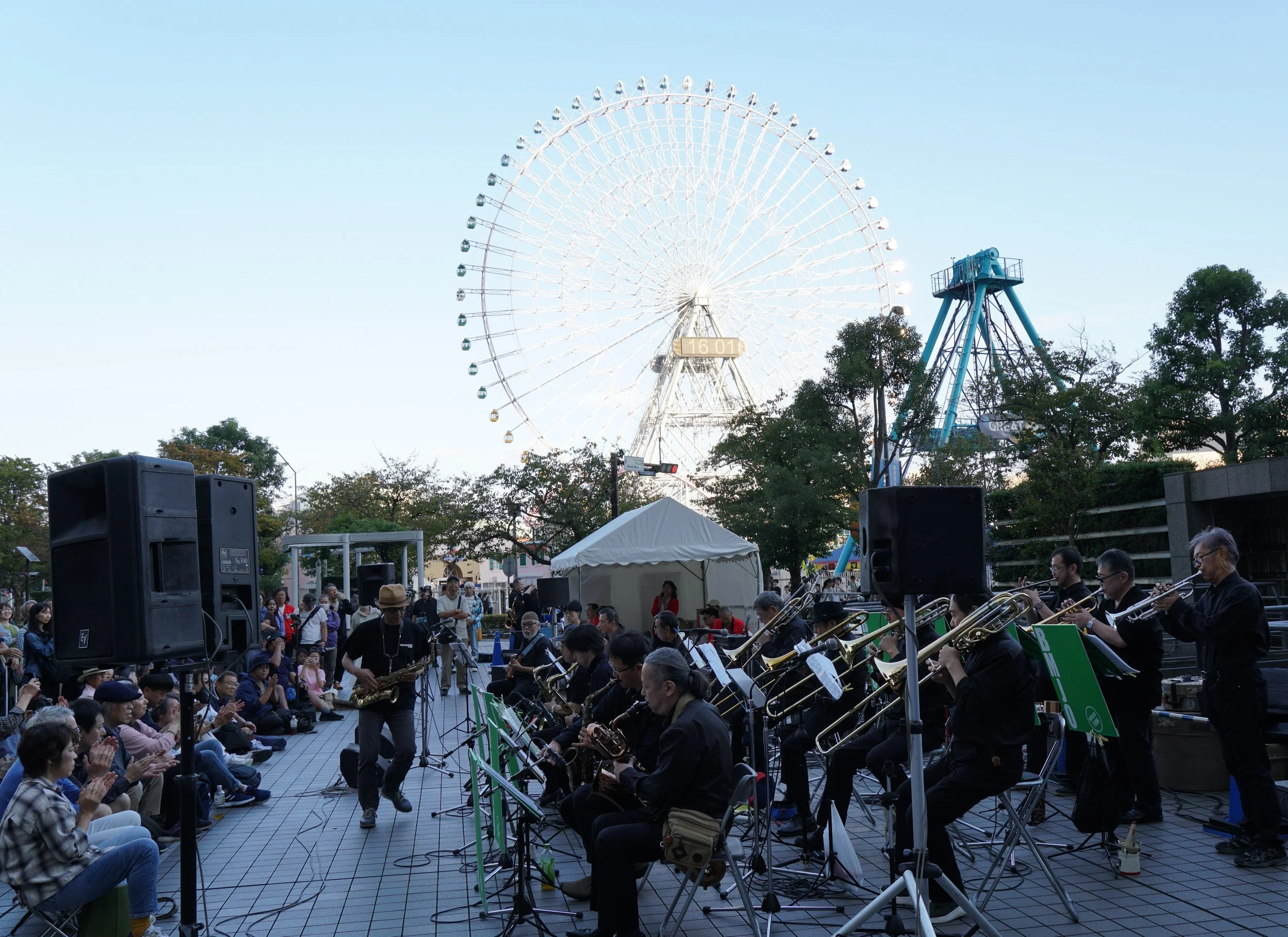
Big Mountain Jazz Orchestra and Cosmo Clock 21 Ferris Wheel
The Big Mountain Jazz Orchestra followed them, having listened in open-jawed amazement while waiting to take the stage. They could only apologize for not having as much energy as the teenagers! And yet, what they lacked in youthful zeal, they made up for in polished professionalism. With tunes from Sammy Nestico, Count Basie, and anime soundtracks, they had the funky feel that is so hard to get, especially in larger ensembles. They were a tight, down-to-the-note band with a deep swing.
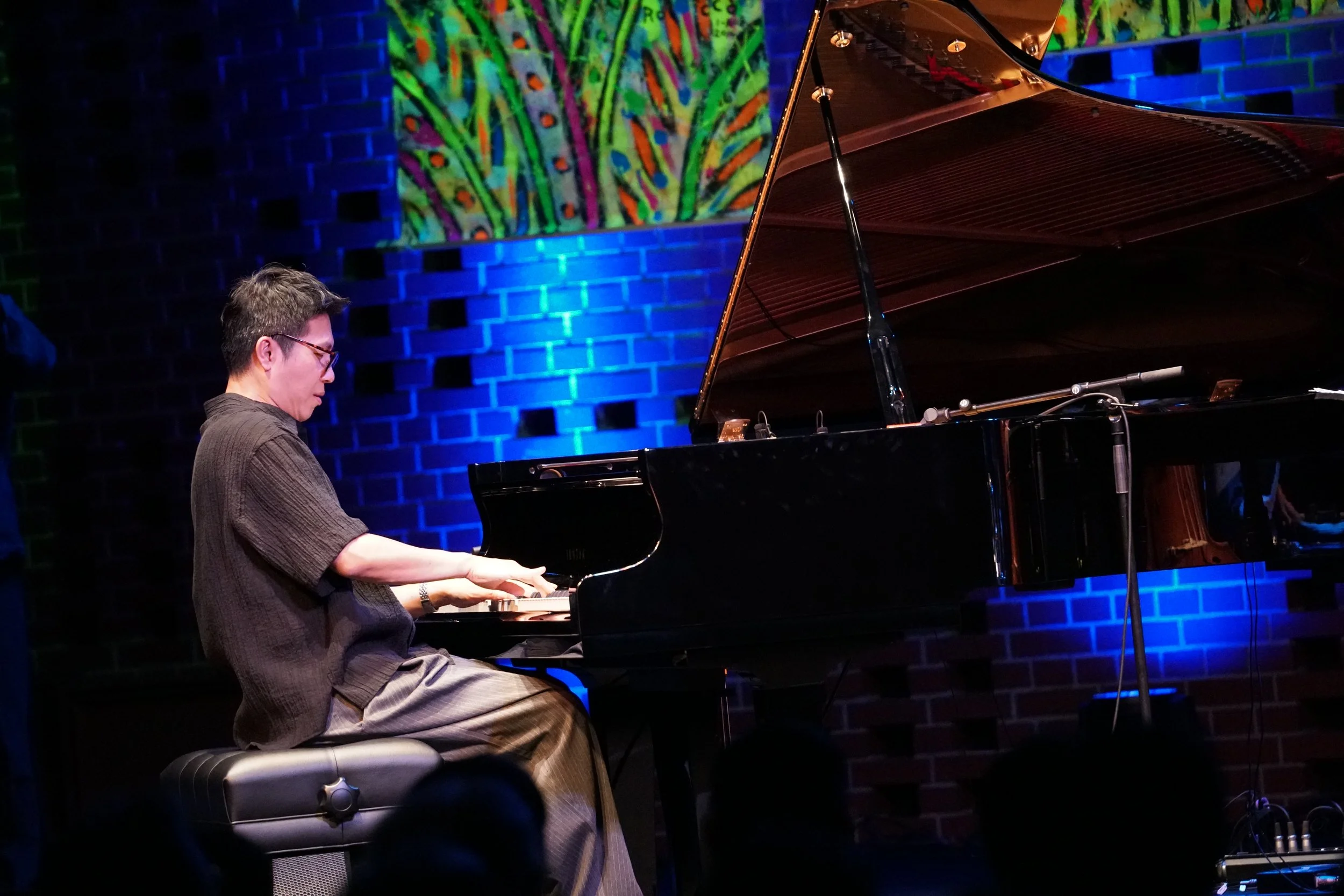
Zeng Zeng Yi
After that, I wandered to the Akarenga Soka (Red Brick Warehouse) for the Taiwanese jazz stage. I wasn’t disappointed. Pianist Zeng Zeng Yi took the stage first. His trio was outstanding. He played with vigor and energy on his own compositions and arrangements. The slow builds and sweeping melodies were quite original. “October 7th” was unique in its symphonic shifts, and “The Olive Tree,” a folk song famous in Taiwan, was delivered with delicacy and deep feeling. “Song of Four Seasons” (or “Four Seasons Red”), a traditional Chinese song, was arranged with a great sense of both Chinese and jazz tradition. His focused jazz trio found common ground between such distinctly different traditions.
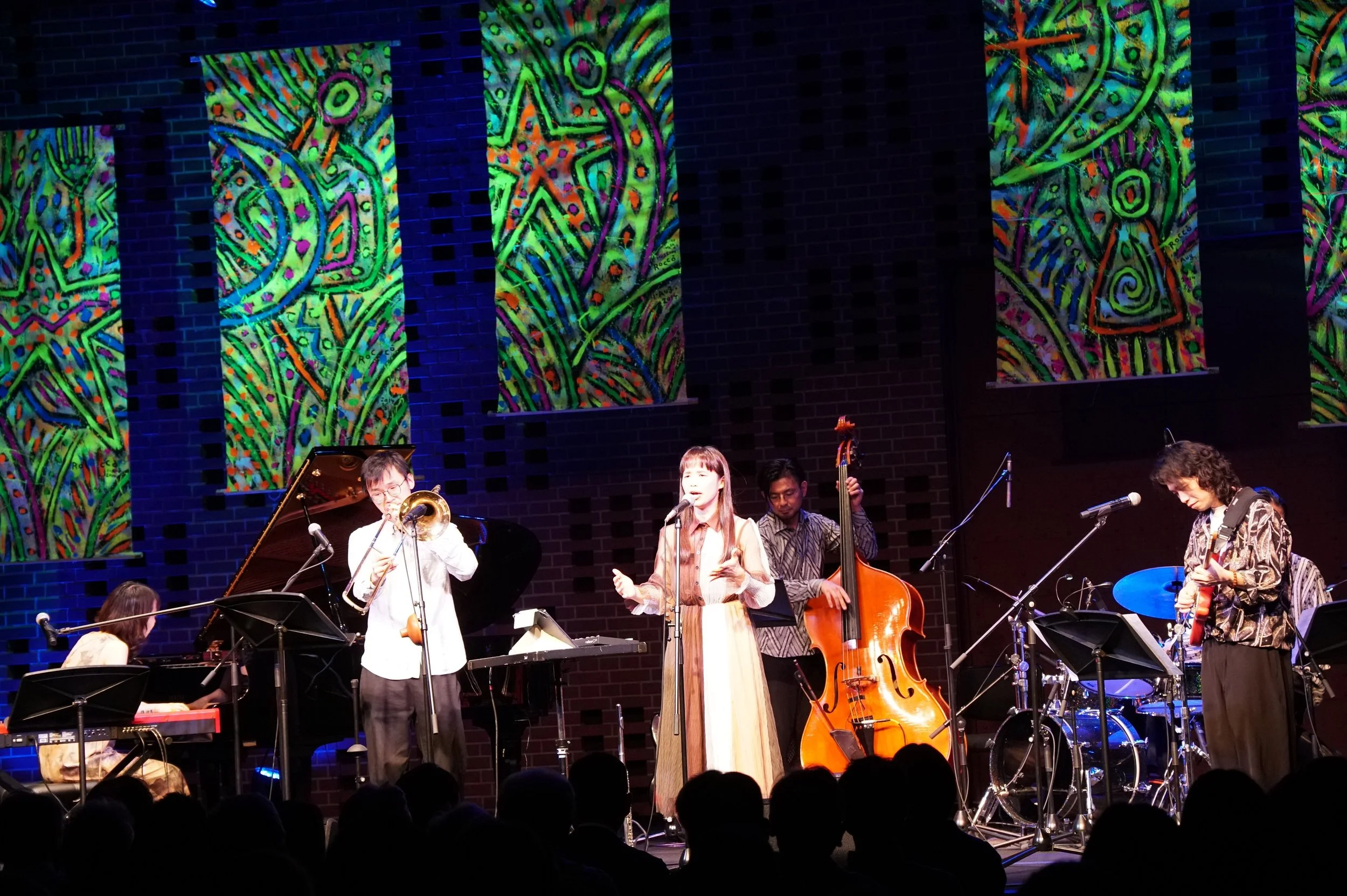
Yen Ting Lo
Singer Yen Ting Lo worked with a band half from Taiwan and half from Yokohama. Her singing was powerfully rooted in jazz, Chinese tradition, and pop music. She performed mostly her own originals and moved comfortably between singing in English and Chinese, with some wonderful scatting as well. Her own tunes like “Tumbleweed,” “I’ll Be by Your Side,” and “Paths Intertwine” were full of heartfelt lyrics and keen musical dynamics. The band dug into great solos one by one. She has a bright future as a personable performer with her own style. She also learned enough Japanese to introduce the songs for her show, pleasing both the Japanese and the Taiwanese in the full house.
After five straight hours of jazz, I headed home. Even confirmed jazz heads have their limits. The next morning, though, I was ready to go.
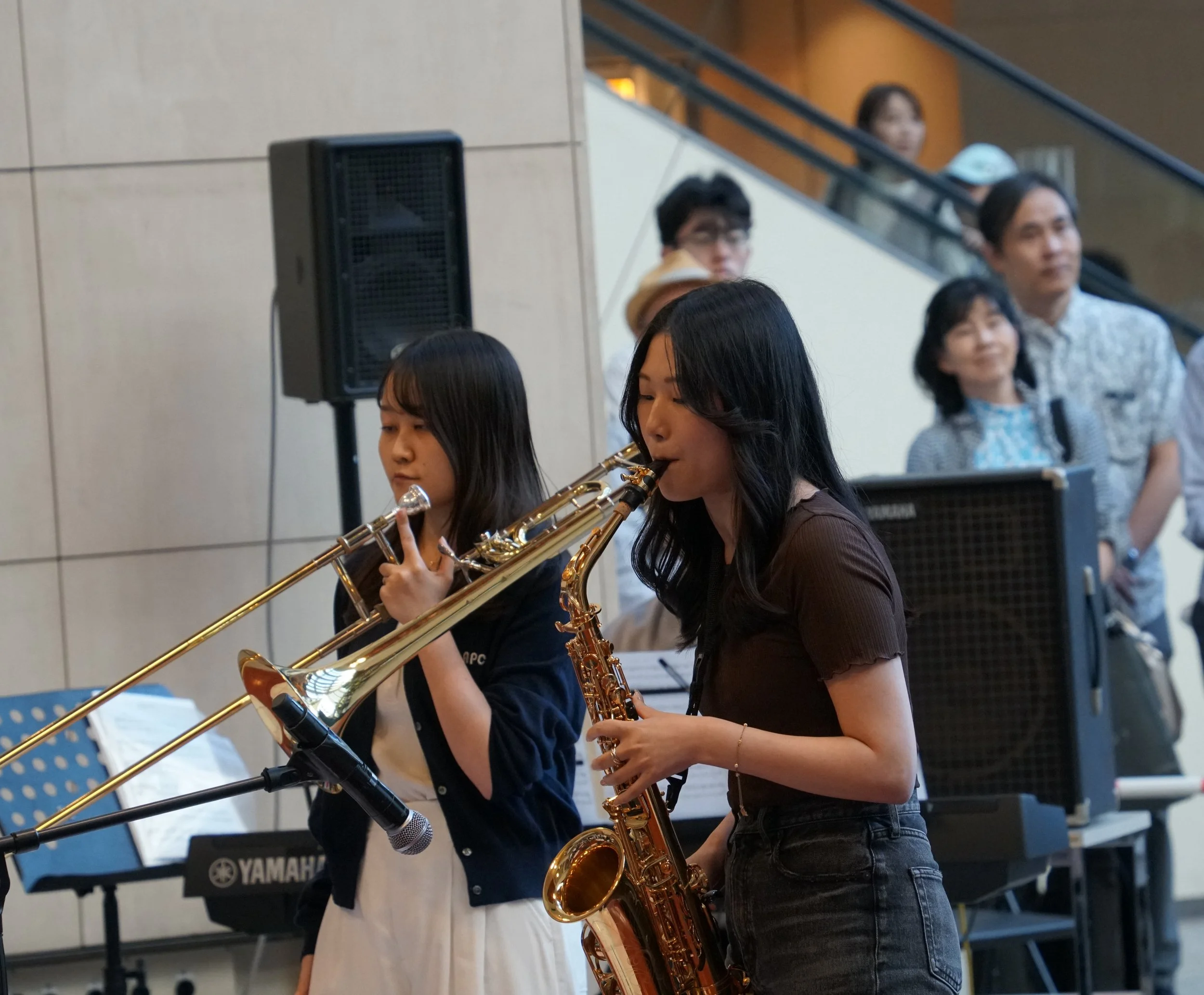
On Sunday, I started off from Queen’s Circle with the Tokyo University Jazz Junk Workshop. The crowd gathered early for this show, maybe for the famed university itself. But what drew me in was the band’s women taking key chairs, strongly soloing, and holding down the rhythm section. Solos came fast and furious from the 17 members. The following Lighthills Bigband was also more than half women, with outstanding bass, sax, and trombone solos packed with energy. Both bands blended their horns smoothly, not only with a practiced feel, but with great swing and a natural sound, too. The traditional repertoire sounded freshly updated.
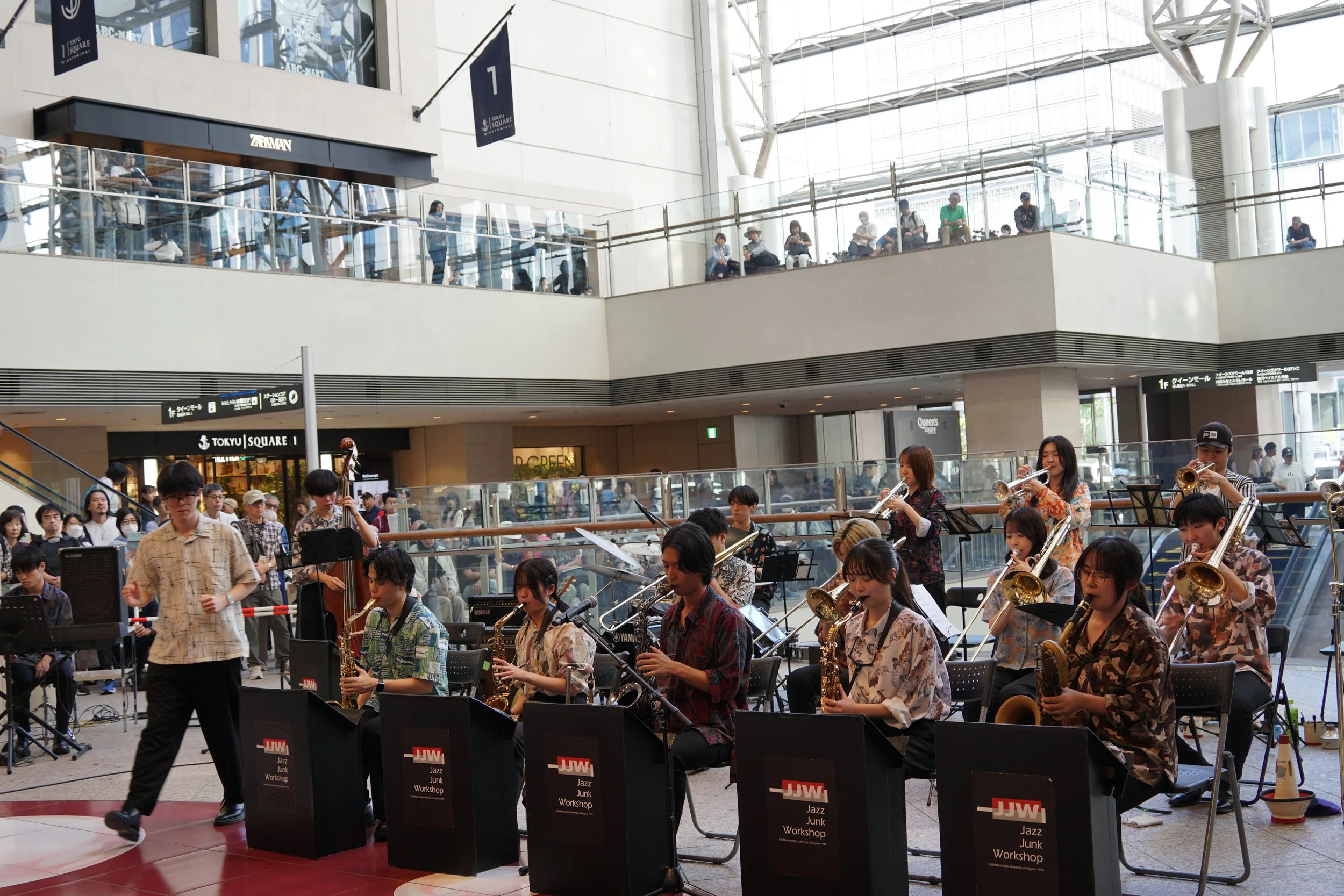
Jazz Junk Workshop
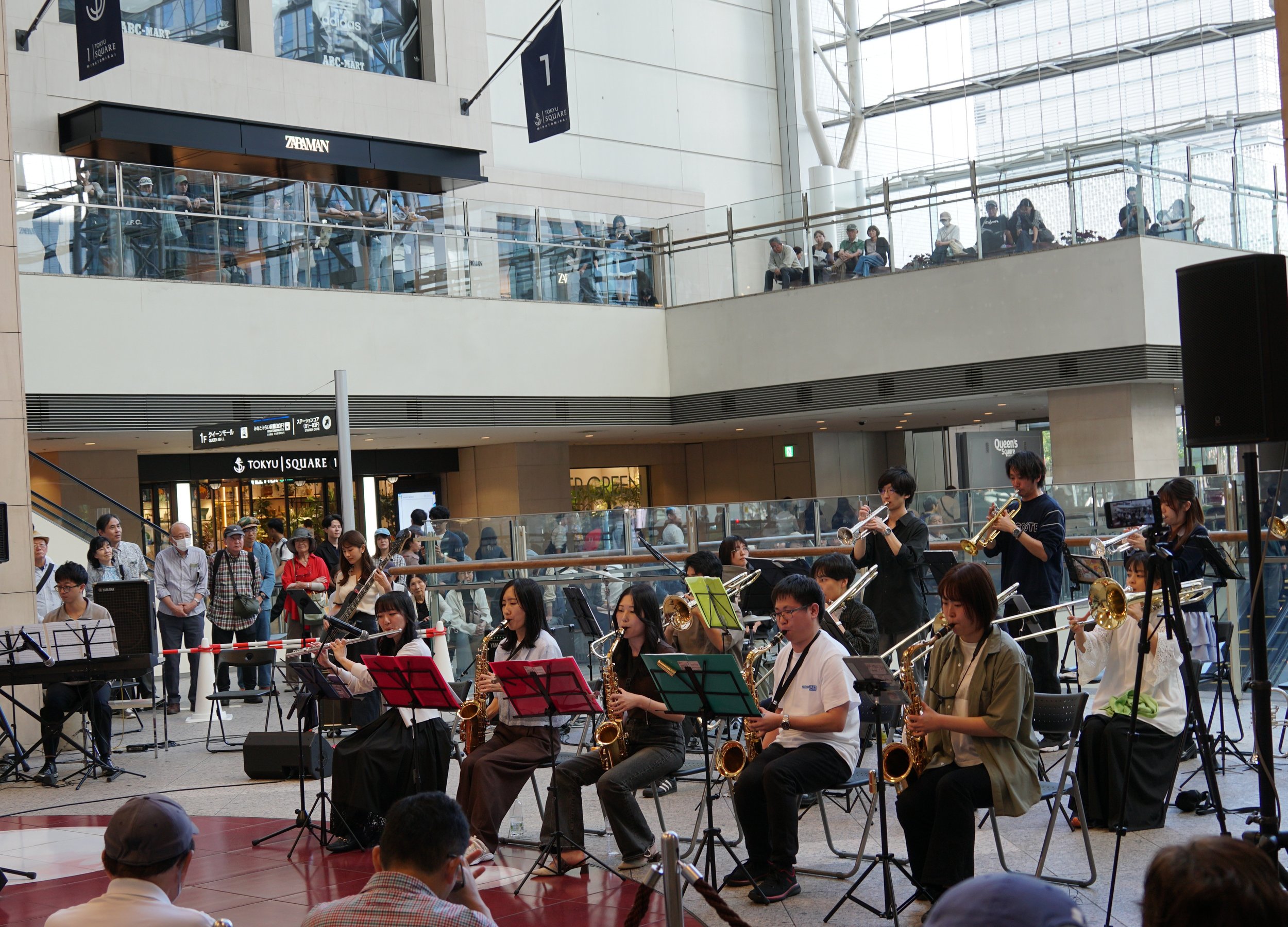
Lighthills Bigband
Smaller groups were just as present over the two days. Melting Pot was an intense quintet of full-on, somewhat free and very intense jazz. They featured great sax work out front and two keyboards with no bass. The bass-less format helped open up Coltrane-style tunes like “My Favorite Things,” the standout closer of their set in Landmark Plaza. At the same venue, Maki Rinka’s vocals resonated through the mall, stopping passersby to hear her clear-voiced takes on classic tunes like “Cabaret” and “Your Pretty Eyes.” She switched back and forth from English to Japanese, translating some lyrics herself. Her English pronunciation and intonation were especially impressive (which is not always the case with some Japanese singers).
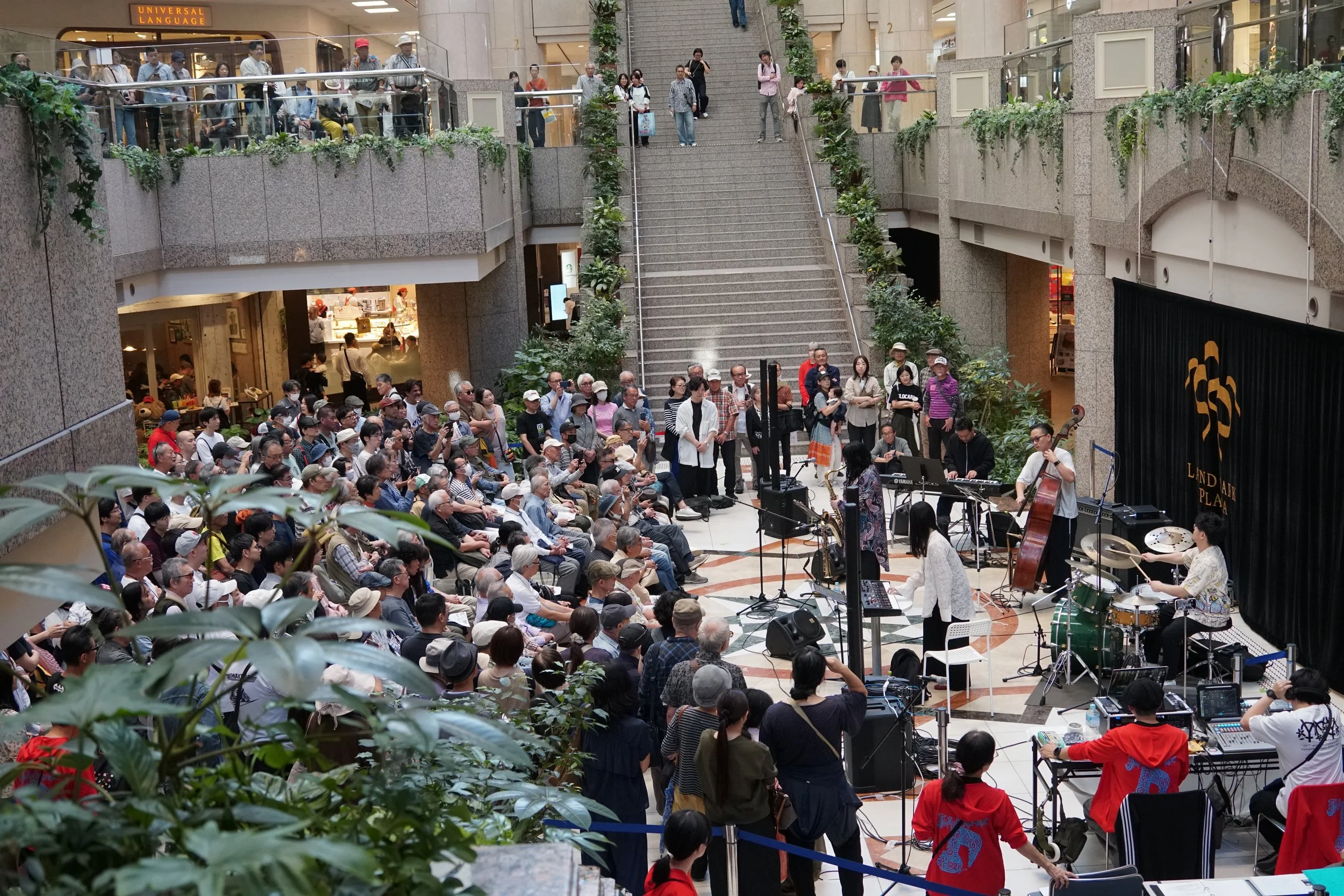
Melting Pot
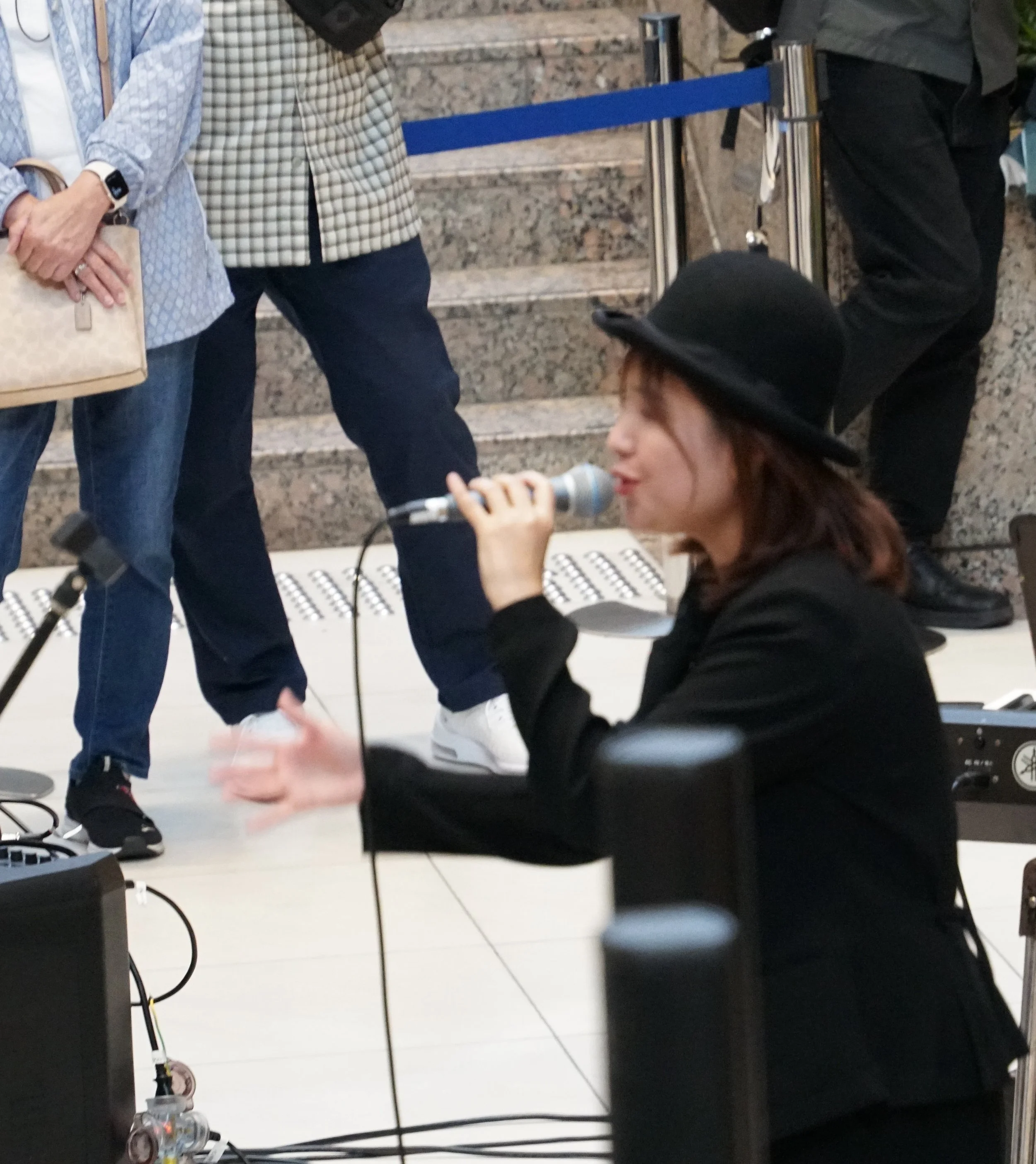
Maki Rinka
Heading back toward Sakuragicho Station, I caught the last two sets outside the Colette Mare shopping mall. The outdoor setting was perfect, except for the wind (the bane of paper lead sheets everywhere). Blue Dock was a group of musicians clearly on their way to bigger things. The young, Yokohama-based musicians laid down great solos, and the interplay of horns and rhythm section really propelled the singer. Next came the Nishi-Tokyo Quintet Plus, a group with tight interplay and great rhythms, fueled by two guitars. Hearing a nine-piece group like this really swing through practiced, focused tunes was a great ending to the day. Commuters, shoppers, and passersby all stopped to hear them play in the large, open space outside the station.
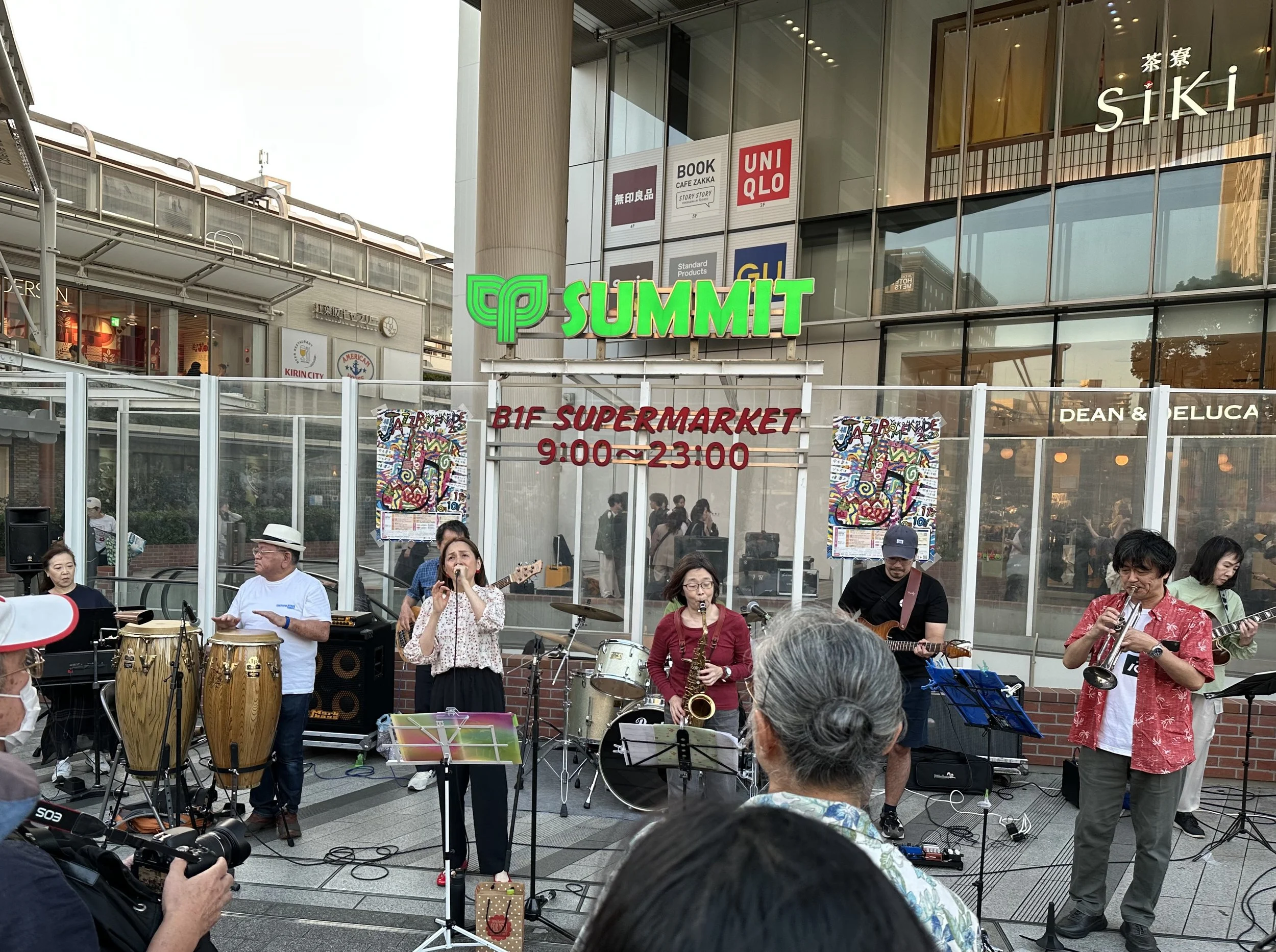
Nishi-Tokyo Quintet Plus
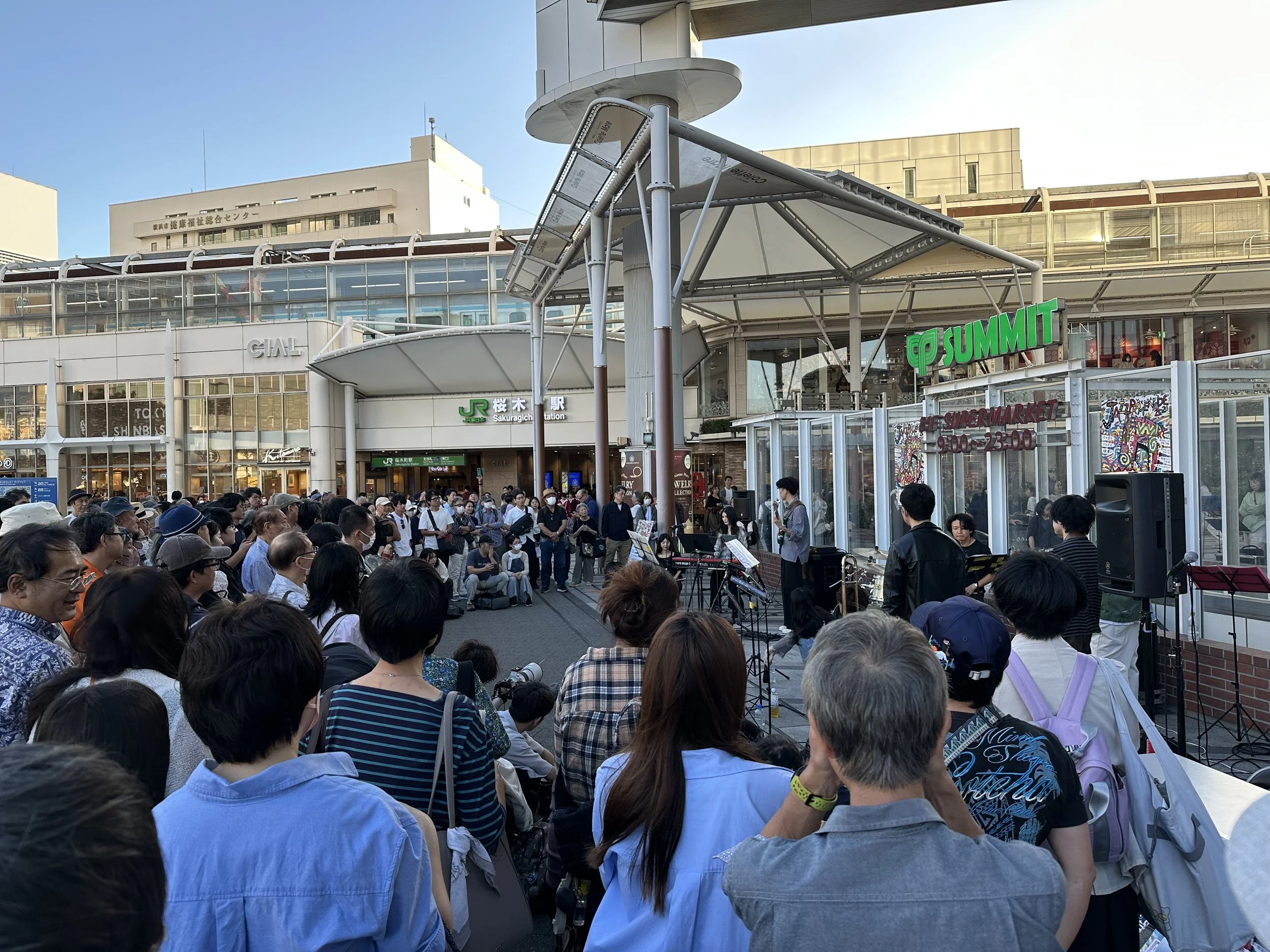
Blue Dock
Over the two days, I made it to less than half of the open venues and only one of the indoor special stages, I’m sad to report. But I frankly don’t know how I could have fit in more. With a total of over 150 groups, it’s impossible to hear everyone. It’s so tempting to try. After the live shows finished, I headed to Yokohama Jazz First, a venerable venue (see my separate review of vibraphonist Koki Nishimura’s impressive set: https://www.jazzinjapan.com/live-reviews-posts/koki-nishimura-group). The jazz clubs in the Yokohama area and even some a few stations away, kept the music going into the late evening.
What struck me most about the weekend was the overflow of musical energy. Old jazz hands in the crowd were easy to spot by the way they nodded at song intros and fell into the music instantly. But newcomers to jazz also seemed entranced. The Promenade is an excellent intro for those interested in jazz or those just vaguely curious. This early autumn gift to the public from the Yokohama City Office is hard to resist. In these consumer commercial times, free live music is a rarity. It’s hard to tell how many people saw musicians over the course of the weekend, but by any estimate, it was a lot. Some amateur or college bands might draw a moderate crowd of friends, classmates, or family, and yet over this weekend, they reached more people than a YouTube video at one time. Most importantly, it was live! Live jazz transformed Yokohama’s retail spaces into in-person musical experiences. That's much more memorable than a downloaded computer file. And isn’t that what cities are supposed to do?
What struck me most about the weekend was pride. Jazz is American, perhaps the most American of cultural creations, and yet in Yokohama, whether playing jazz, listening to jazz, or volunteering, stage managing, organizing events, or just standing around taking it all in, pride pervaded the atmosphere. The Yokohama Jazz Promenade shows just what can happen when everyone is on the same page, or the same lead sheet! Some successes are just that, but others are a success AND a pleasure! I’m already looking forward to next year!
Blue Dock
Lighthills Bigband