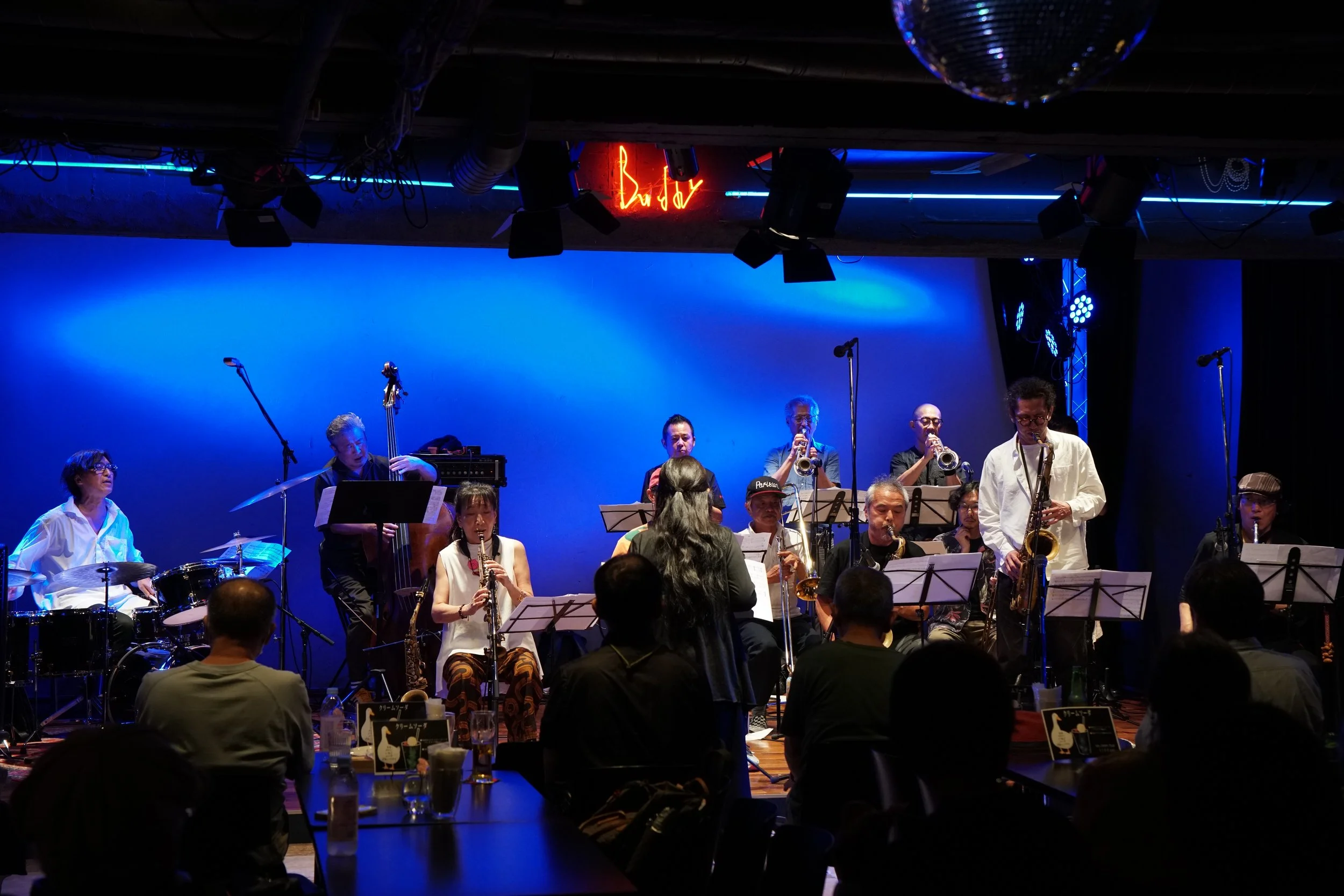
Satoko Fujii Orchestra Tokyo
July 29, 2026
Live in Buddy
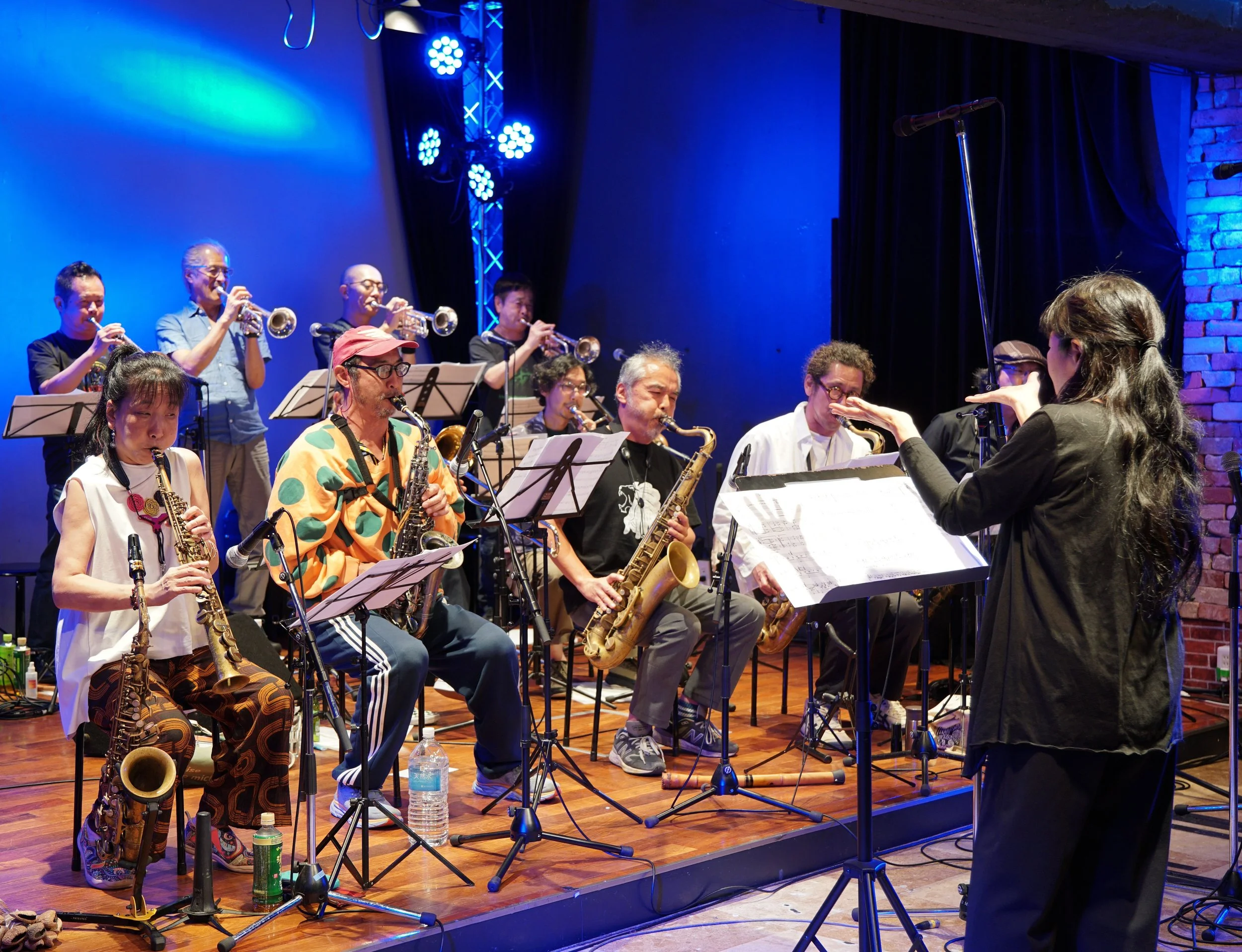
Sachi Hayasaka早坂紗知 – alto sax, soprano sax
Kunihiro Izumi泉邦宏 – alto sax
Kenichi Matsumoto松本健一 – tenor sax
Daisuke Fujiwara藤原大輔 – tenor sax
Ryuichi Yoshida吉田隆一 – baritone sax
Natsuki Tamura田村夏樹 - trumpet
Yoshihito Fukumoto福本佳仁 – trumpet
Takao Watanabe渡辺隆雄 – trumpet
Yusaku Shirotani城谷雄策 – trumpet
Yasuyuki Takahashi高橋保行 - trombone
Toshihiro Koike古池寿浩 – trombone
Toshiki Nagata永田利樹 – bass
Akira Horikoshi堀越彰 – drums
The Satoko Fujii Orchestra’s monumental project of bands spans the globe. Recording with five different bands, each based in a different place, is a fascinating take on how big bands, compositions, and improvised collective music work. With different orchestras in New York, Tokyo, Kobe, Berlin, and Nagoya, one wonders how they differ and why. New recordings from each orchestra are coming out, but the live recording of the Tokyo incarnation took place at Live in Buddy on July 29.
Setting metaphysical questions aside, the Tokyo orchestra’s performance was intense, compelling, and powerfully performed. The compositions are titled with characters from Japanese culture and mythology, though that commonality only serves to show how unique each one is. Both Fujii and her musical partner Natsuki Tamura conducted the orchestra with a great sense of bravado and subtlety. Recording them live with some of Tokyo’s most eclectic musicians was a brilliant choice. With Fujii and Tamura dividing the role of conductor, the pieces also took on different approaches and very different feelings.
First was “Kitsune” (“Fox”), conducted by Tamura. The orchestra’s dynamic palette and sonic power were unleashed from the band members right away. In Fujii and Tamura’s hands, the orchestra works with textures as much as structures, though the occasional steady tempo or melodic jazz phrasing popped up from time to time. Solos went spiraling in all directions. “Karasu” (“Crow”) was fast, nimble, and filled with cries that sounded a lot like a crow in human form. The song’s motion swooped and rolled, punctuated by a beautifully discordant trumpet solo and vocalics. The tune was bird-like, slowing for a rest, flying for height, and creating its own unique passages.
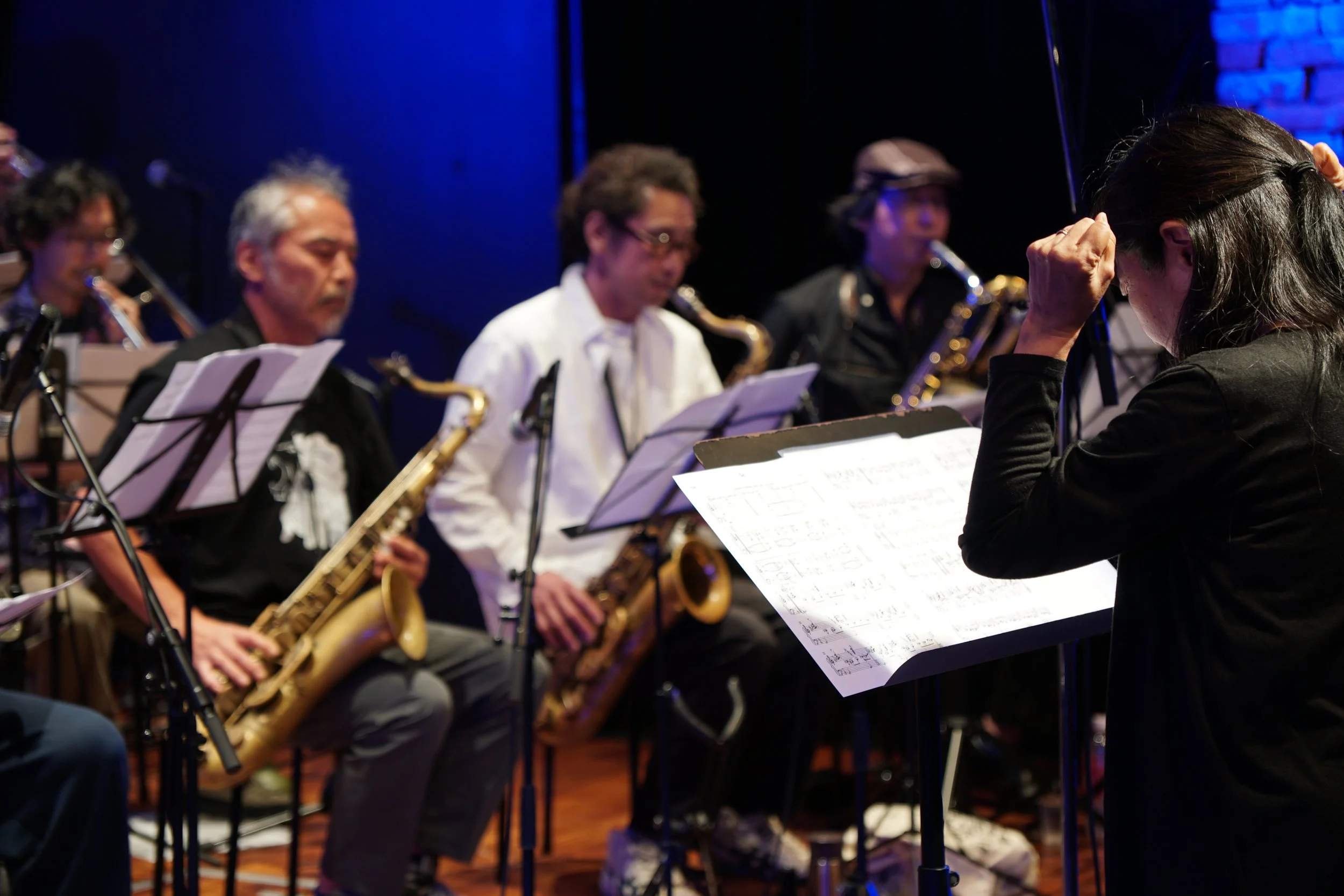
“Jizo” (the much-loved Bodhissatva) was big, bold, and bass-heavy. The flow of energy was held steady by Horikoshi on drums. He’s maybe the most flexible member of the band, fitting into every passage with fresh rhythmic energy. The tune had a heaviness, like the stone statues of Jizo at temples, and yet was relaxed in its approach to the music. “Oni” (demon or ogre) was, like its namesake, full of terrifying power, and yet in some ways was the most melodic tune of the evening. Well, “melodic” might not be the right word. It was more of a flow of musical textures, qualities, and depths. The orchestra aims to provoke, or to provide an opportunity for, powerful reactions.
“Noraneko” (stray cat) moved back and forth between fast and slow tempos. The prideful openness gave way to covert delicacy, capturing a sense of straying and freedom. Tamura conducted with his usual playful approach to finding out what happens when everyone is set free, but everyone is listening intently to each other. The solos here were especially well-done, with drums and bass driving the soloists.
Perhaps the most moving piece was the finale, “Kappa Ondo” (a mythological water spirit in Japanese folklore). The song was written by Tamura’s father, who was a pioneer of special education in Japan. It started with a wild intro, trumpet and various shakers and noises, and had perhaps the most Japanese tonality and rhythm of the evening. Sharp shifts in dynamics blended with elements of Japanese harmony and jazz complexity, all layered with full-on energy from the band.
The CD will be coming out soon. Watch for it and the other orchestra recordings too. They are an intriguing delight.