Dr. Jazz Presents the Niccolo Faraci Quartet From Italy
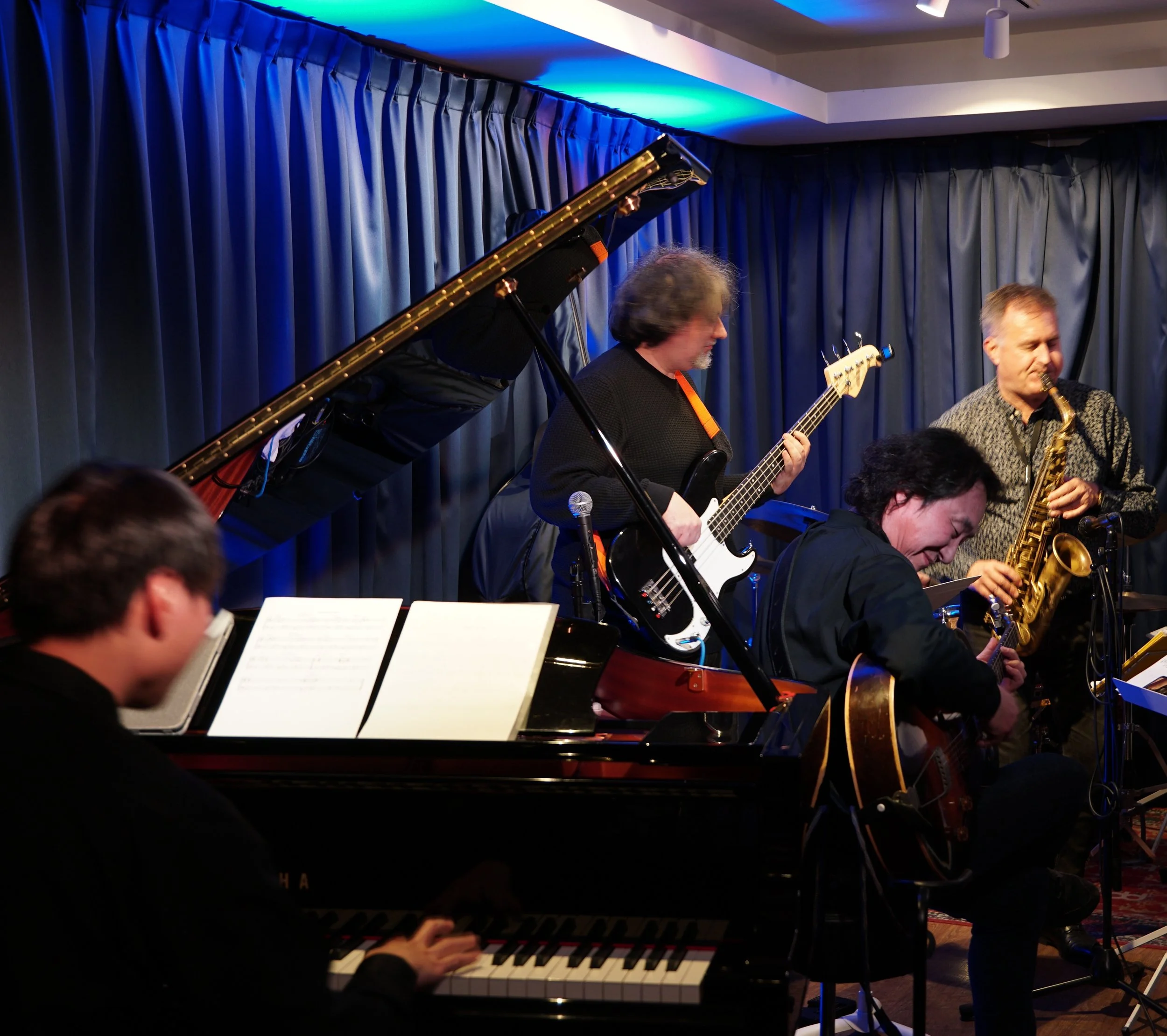
January 7, 2026, at Velera
Niccolo Faraci – bass
Jim Butler – alto sax
Koshiro Iwatani岩谷耕資郎 - guitar
Kazuki Toyoda豊田一樹 - drums
Yutaka Kawarasaki 河原崎豊 – piano
Sometimes, when jazz musicians get together without much preparation but with a lot of common interests and a great deal of experience, magic happens. That was the case with Dr. Jazz's presentation of Niccolo Faraci, who came all the way from Italy to play in Tokyo. With Iwatani on guitar, Toyoda on drums, Kawarasaki on piano, and Butler on alto saxophone, the group came together as an impressive jazz unit whose music felt like it had been rehearsed for years.
Combining standards with originals from Faraci, the evening was a lesson in artistry, camaraderie, and technique. "Nardis" was an easy opener, with hard-driving solos, followed by a delicately played original from Faraci, "From Milan to Tokyo," written for this trip. The soft, clear flow with a samba groove was lifted by Iwatani's guitar work and Butler's solo.
"James," a Pat Metheny tune, was upbeat, with, again, great solos all around. The band locked together earlier than many groups do, so every song found them listening and playing as one. "All the Things You are" featured a great piano intro and solo from Kawarasaki. "Wave" closed out the first set and showed what Faraci mentioned in between songs, that "jazz groups are an ideal society." The group clearly modeled that in both sets.
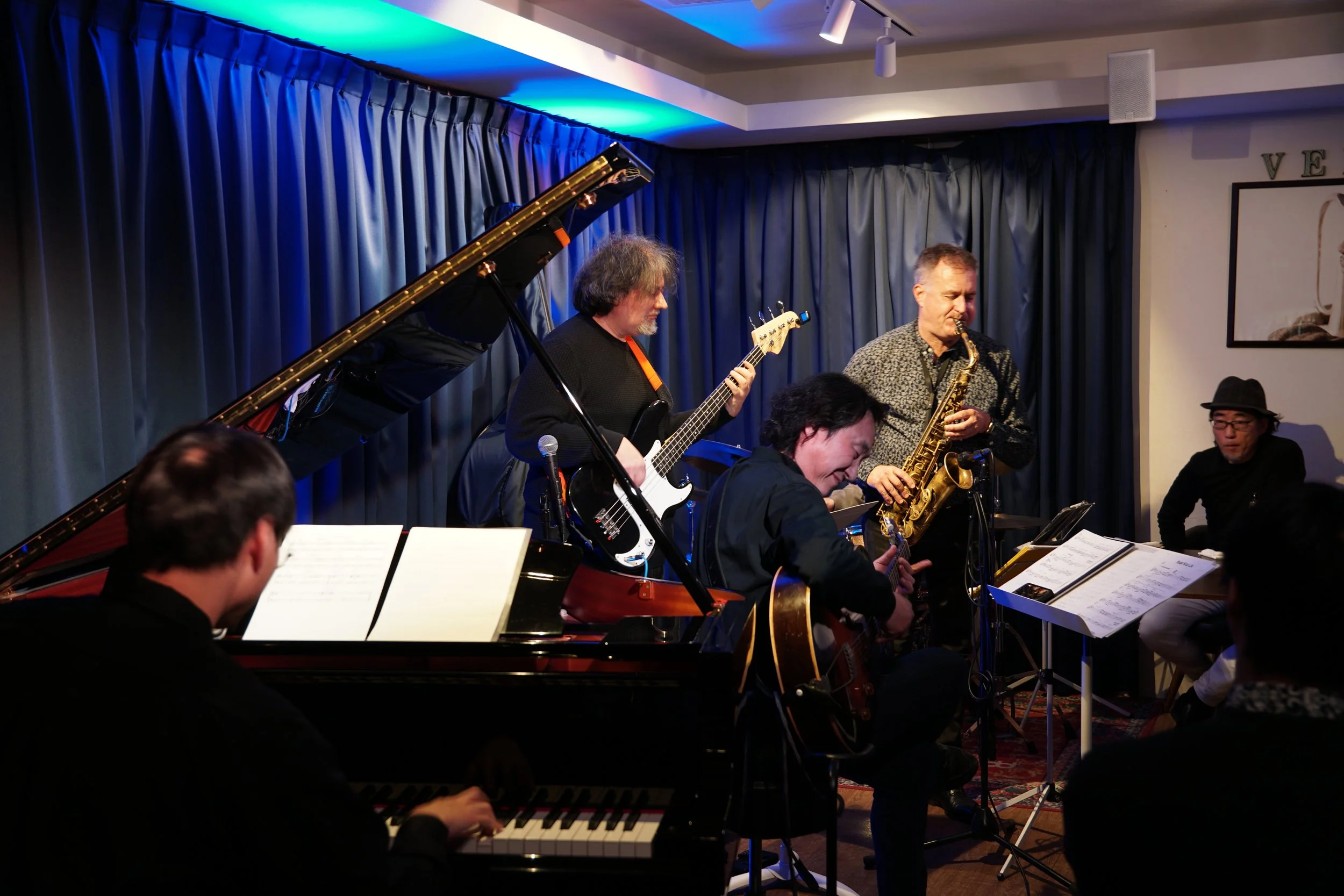
The second set got started with another Metheny tune, "Bright Size Life." Faraci and Iwatani clearly have a fondness for Metheny, and they rollicked through the tune on its 50th anniversary. But no less well-played was Faraci's original "The Cat is Up the Tree," which featured a chart that put all the musicians in a position to showcase their strengths, and ended with a fantastic drum solo from Toyoda.
The standards "How Insensitive," another Jobim tune, and "There Will Never Be Another You" let the musicians dig into great solos again, passing the baton like a relay team. "Better Days Ahead," from Metheny, kept the energy in a forward-driving groove.
Wes Montgomery's "4 on 6" pushed the solos into funkier, deeper territory, which segued into Herbie Hancock's "Canteloupe Island," which went round and round, becoming intense fun for all involved, on stage and off. They were an ideal society indeed!