
Mikiko Nagatake Live at Nardis
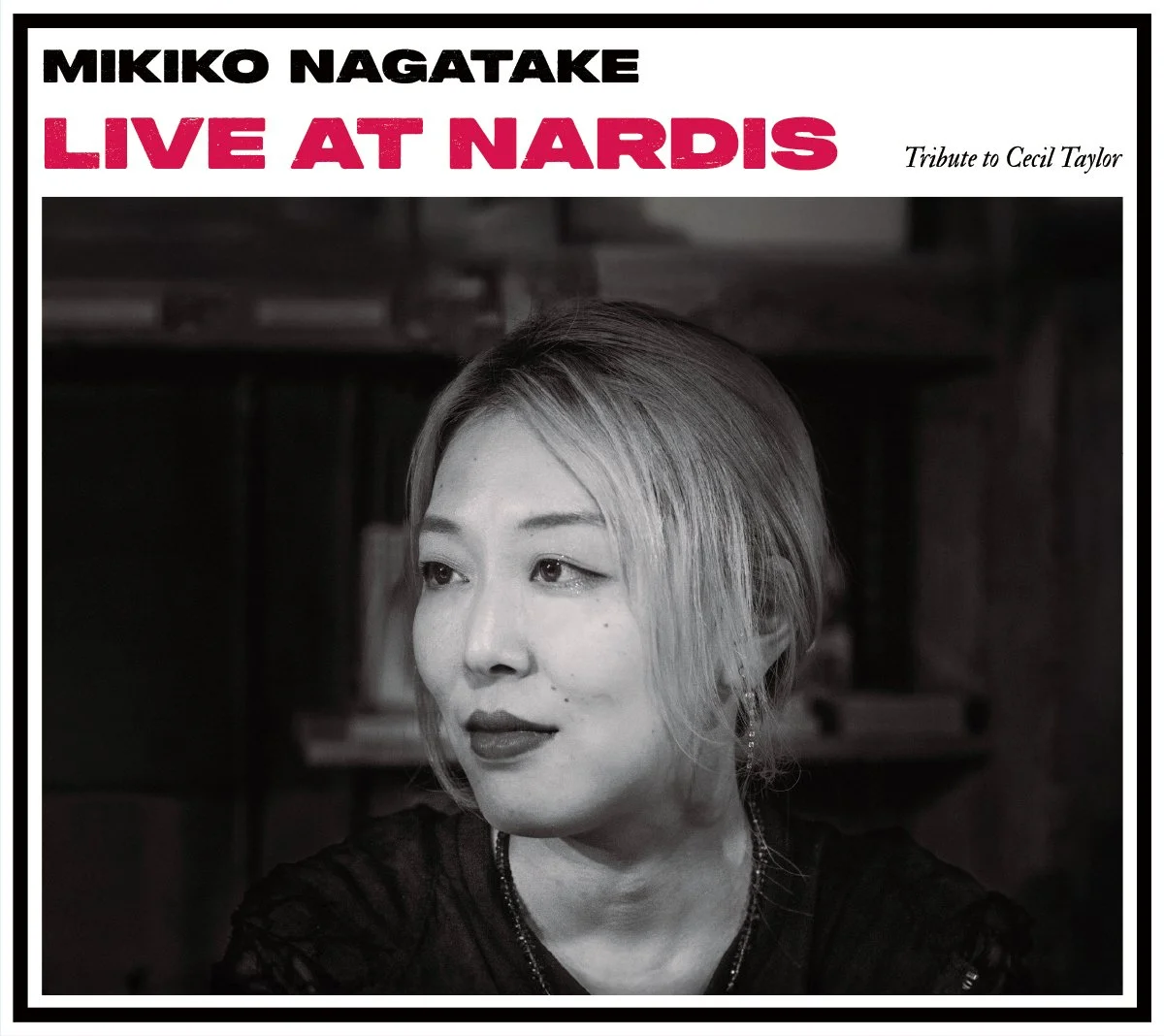
Mikiko Nagatake
Live at Nardis (Tribute to Cecil Taylor) (Rindo 2026)
Mikiko Nagatake 永武幹子– piano
Recorded at Nardis in Kashiwa, Chiba in 2025, this expansive, sturdy set of improvised tunes dedicated to Cecil Taylor catches Nagatake at her best. Fully improvised except for a Cecil Taylor number, “Lono,” and a fully worked-over Richard Rodgers tune, “This Nearly Was Mine,” the flow of intelligent ideas and spontaneous spirit shines through.
Though Nagatake plays with some of the best groups in Tokyo, here she gives free rein to her own singularly imaginative keyboard style. Drawing on Cecil Taylor’s vocabulary, approach, and way of thinking, Nagatake plays with her own percussive immediacy. She plays strikingly fast at times but isn’t afraid of slowing down and putting in lots of silent space, as she does on the Rodgers tune, perhaps the straightest take on the CD. Even in the most fully improvised numbers, she grounds herself in unique, pleasing turns of phrasing.
She uses gerunds for her titles—“Storying,” “Plunging,” “Longing,” and “Settling.” She plays verbs, not nouns. Her fluidity and sense of motion continually create excitement. As with many long-form piano improvisers, she brings us on board with tribute and tradition, then lets her keyboard mind run spontaneously. Each piece feels grounded and then set free to roam.
There’s a sense of playfulness in every song, too, even while each song has weight and heft, too. Under her hands, the keyboard becomes a tool to find out what’s next, even while staying in the mode of appealingly melodic. “Storying” has bluesy figures and calm harmonies. “Plunging” (“Pt. 3”) does exactly that, tumbling and swooping through possibilities, while her strong left hand digs for depth.
“Longing” moves into a pensive mood whose layers of searching melody linger even as the frustrated feeling of longing comes through in the middle passages. The strong sense of sections helps order the spontaneity. “Settling” feels as if it is picking up the pieces from “Longing” and placing them into a differently felt order. The last tune, “Improvisation #2,” echoes the three opening numbers with one strong keyboard move after another.
This is only her second solo recording, but it has confidence and clarity, and boldness that is rich and creative. The best improvised music has always been bravely accomplished and singularly expressed. This recording is one that speaks not only to her experience already accumulated, but also to her unique vision heading into the future.